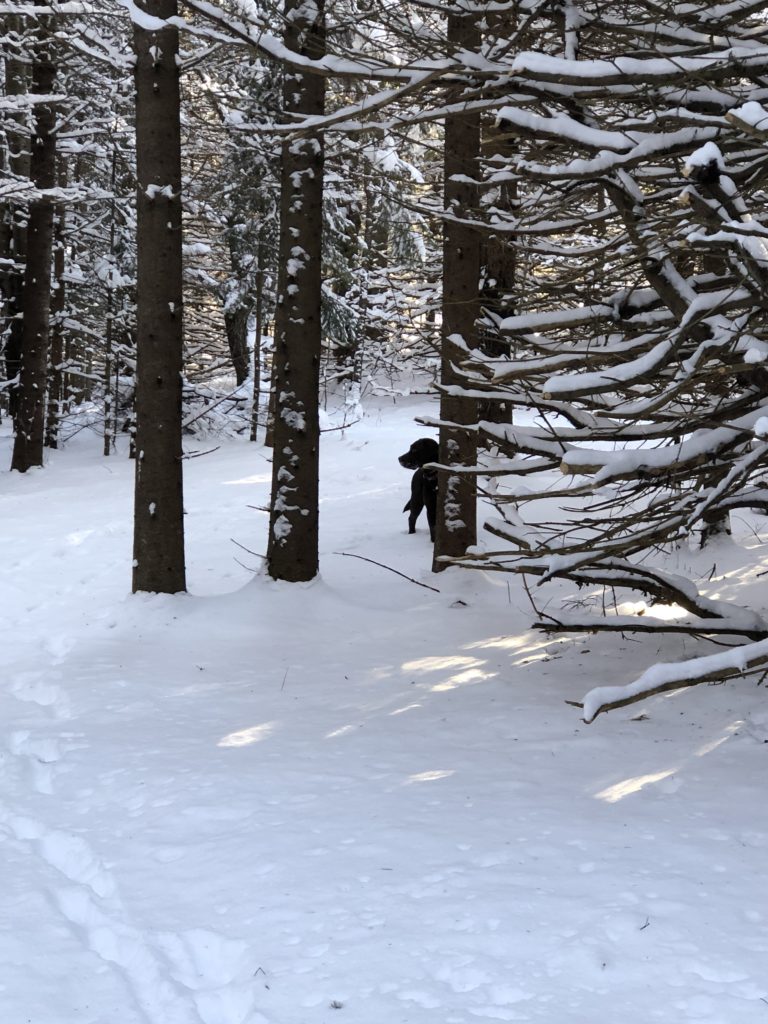
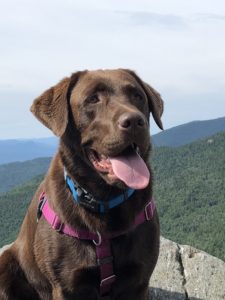
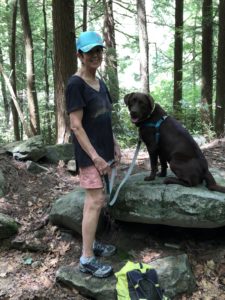
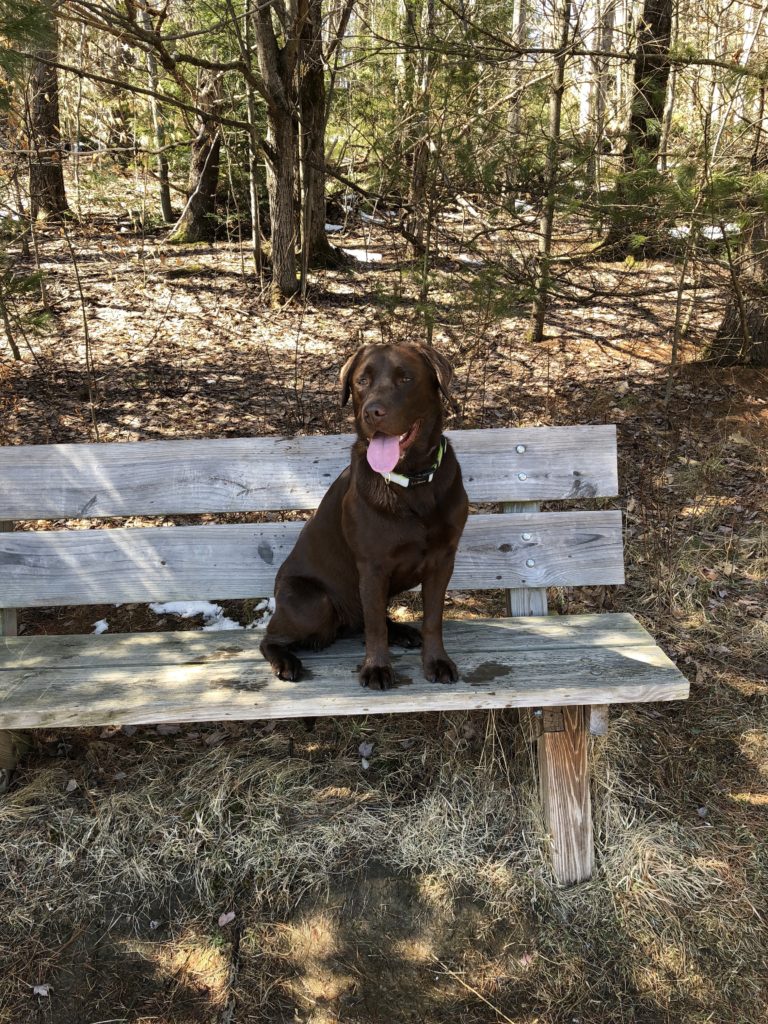
 I love to hike and explore in Vermont and New Hampshire with my Chocolate Lab, Sophie. Our day hikes take us from meandering, wooded brook-side trails to rock face and astonishing summit views. Sophie, not quite 2, loves these adventures and is responsible for my new passion – hiking.
True confession: I am afraid of bears. Yes, I know, I know. Most likely most bears are far more afraid of me – or at least far more reluctant to encounter me than I am to encounter them. But that doesn’t change the way I feel. Hey, there are rogue people, aren’t they? I’m sure there are rogue bears out there in the woods. And more significantly, there are bears in the woods who might be surprised to see me show up or, far worse, a mama bear who might jump to the defense of her baby bear(s).
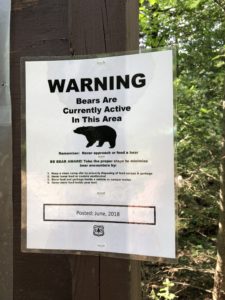 Perhaps what is significant here is that I know there ARE bears in the woods and on the trails. How do I know this? No, I have not met one – yet. I have seen a bear on my husband’s game camera set up on a trail I use frequently. I have stepped over bear scat and I have read blog posts, seen tv news reports, stopped to read signs posted at State Park entrances, and heard anecdotal accounts of bear sightings, often corroborated by cell phone pics.
Moreover, it seems that the bear population is on the rise here in Vermont. We know this for a number of reasons and because wildlife officials are seeing a rise in the number of calls about incidents with black bears.
Most often bear activity is related to campsites and food. Guidelines and warnings about camping, food handling and storage, discarding garbage and Leave No Trace are easy to follow and involve a healthy dose of common sense.
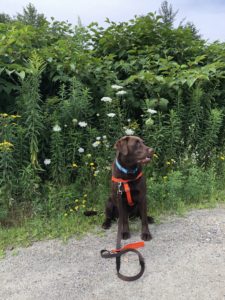 For those of us who hike with dogs, there is an extra layer of prevention and protection for which we, the human companions, need take responsibility. I would hope that my dog would sense the presence of a bear long before I would and would alert me. I would fervently hope that my dog would not notice cubs and, thinking they are other pups to be greeted and played with, go do so. (Labs are oh so friendly with other dogs, aren’t they?). Disaster would ensue.
So, here’s what I do. I carry a leash in my hand if Sophie is off leash and, if I see her go on the alert or look skittish about anything, I call her back and snap on the leash until I know the coast is clear. Of course, things could get out of hand quickly but this is a start.
If I am anywhere near a campground or picnic area, I keep her leashed – especially if I am near the dumpsters. (Leashing your dog is often posted in this type of area anyway.) Following the advice of a friend, I have ordered a bear bell for Sophie to wear and may put another on my pack as well. On the other hand, I keep up a running conversation with my girl anyway, so I’m sure we give warning!
Here, as is often the case, awareness is the best policy. Though it may be tempting to zone out on a remote trail, perhaps it’s best not to.
Shared below are some words of advice from Vermont’s Green Mountain Club as well as a helpful link to yet more tips. Hike on!
 WILDLIFE – Green Mountian Club August 2, 2018 Black Bears–Bears have become more active around Long Trail campsites and trails in the last few years. In areas with posted bear warnings, please follow a few basic steps:
- Keep dogs leashed.
- Do not feed or approach bears.
- If you encounter a bear, make noise* and back away slowly. Do not run.
Another GMC post says this: Bears are becoming more numerous and more active. Though usually shy and unaggressive, bears that have sampled human food can become dangerous, putting their lives at risk. Help bears stay safe: If you encounter a bear, stay calm, keep eye contact, talk to the bear in a conversational voice*, and back away slowly. Do not run. Do not feed or approach bears. Report bear encounters to the GMC.
(Note: there does seem to be a discrepancy about making noise or a conversational voice, but it is agreed not to turn and run.) It is also important to consider other wildlife… MOOSE – Moose tracks and droppings can be seen throughout the trail. While moose look similar to deer, they can be extremely dangerous when irritated. If you see a moose on the trail, do not approach it. Wait for the moose to move on before continuing. They are particularly territorial in the fall during mating season. Their eyesight is very bad so the recommended strategy if a moose charges you is to try to put a large tree between you and the moose, remove your pack and make human noises.
And the link: https://www.ripitenergy.com/beware-bear-10-safety-tips/
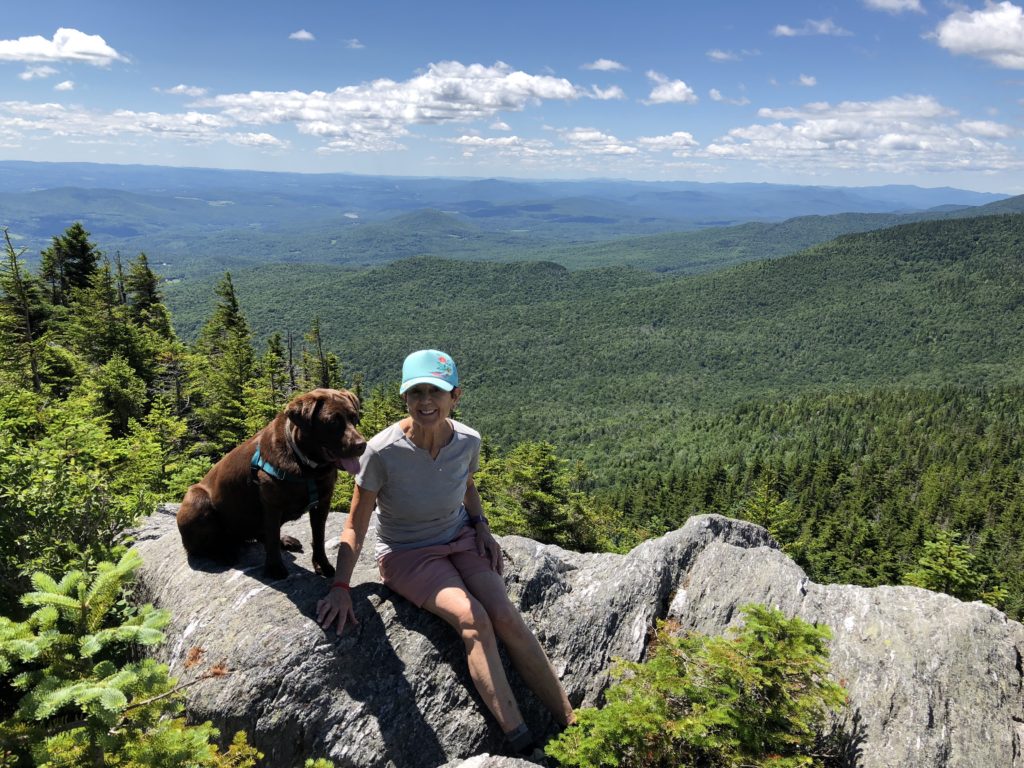
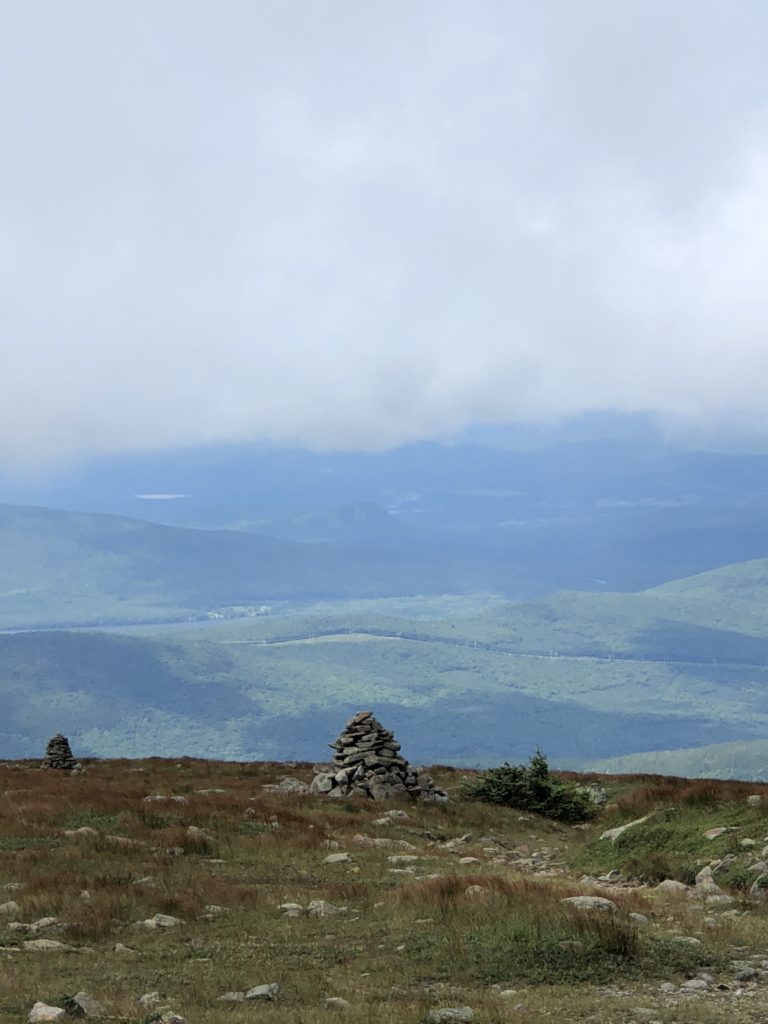
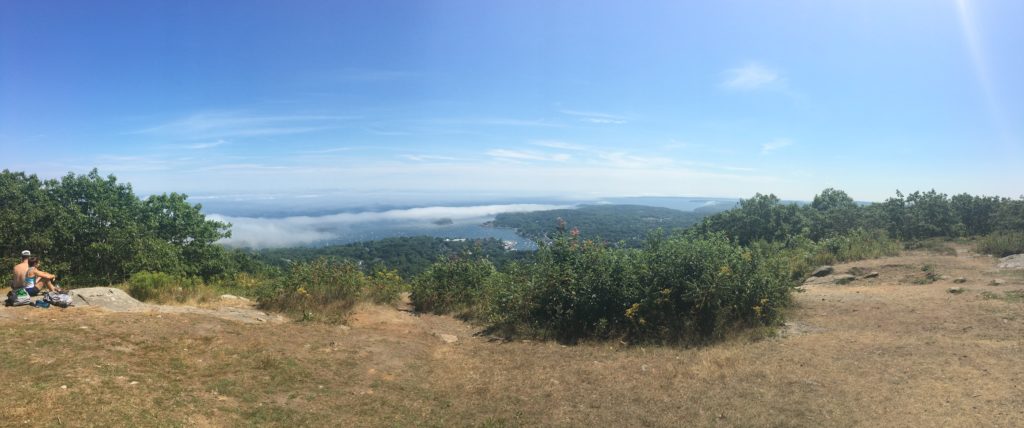 For many, this is the entire purpose of hiking. For others it is a perfect lunch break, rest or photo op. Note: if hiking with dogs or children, beware of fragile vegetation at the summit or potentially hazardous drop offs. Safety and consideration always rule.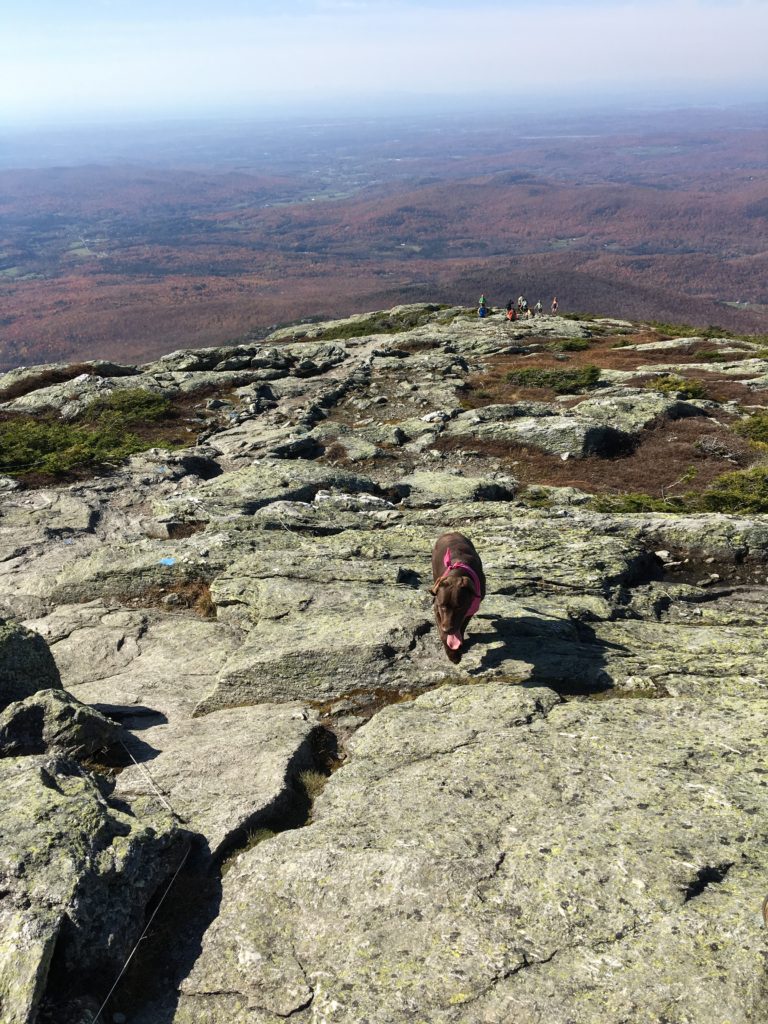
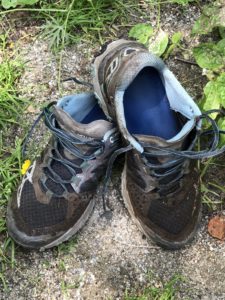
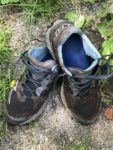 for the most part because I opt for traction and flexibility but my ankles sometimes call out for higher boots, etc), poles, and a pack. Note: when I hike the Whites or with my friends, I am the only one without poles. In the past I have cited my need to have hands free for Sophie. Now, with my new vest that easily snaps in folded poles, I have a pair on order. When I hike on easier day hikes in Vermont, I see many without poles. Good to have options! Oh, and BTW, Ultimate Direction now makes poles with 2 levels of handgrips that so easily address the dilemma of uphill and downhill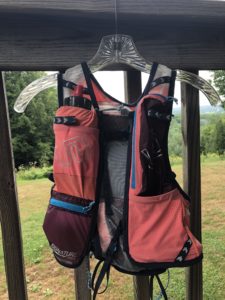
 I always wear a baseball cap and my RoadID bracelet with emergency contact info; states that I am hiking with my dog just in case…and Sophie’s collar sports her name and a phone #)
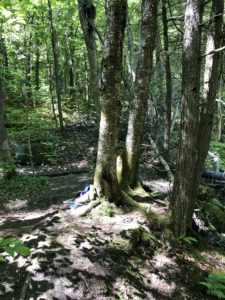 : Both stillness and movement are deepened by enhanced senses of sight, hearing, touch and smell. Changes in air quality over the time spent in practice are palpable; air movement touches the skin as a reminder that the world is always in motion. Bird song accompanies asana and provides easy focus for meditation. (Depending on where you practice you might hear city sounds or water rolling, crashing or babbling.) While plants, soil and trees exude smells of their own, the very scent of freshness is real. Practice yoga, practice meditation, practice balance, practice awareness.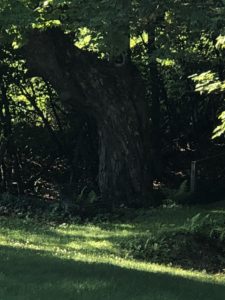
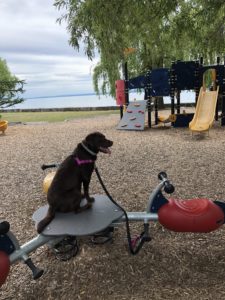
 Explore. Explore. Having a pup who needs a lot of exercise is a great benefit! With just a little effort – asking the hotel staff, searching the internet, checking out pamphlets, etc. – I found miles and miles of trail systems, places to take my Lab for a swim or to play with other dogs, even a county fair ground where I could walk her early and late each day and watch the sun and/or moon rise over the nearby lake.
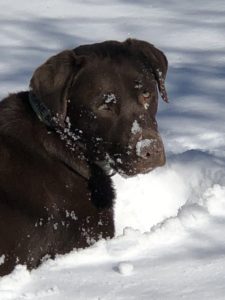

 Each January 1st I ask my clients to hone in on a goal or two for the coming year – specific and attainable. This year the stars came out and I was able to post an entire board of wonderful, meaningful and achievable goals.
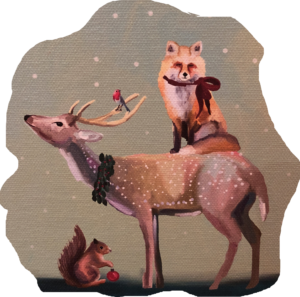 Depending on where you are in your annual cycle of training (periodization); depending on your priorities and goals; depending on your personal commitments and family obligations; depending on your profession, the climate, and just about anything you can think of (or excuse), your fitness or sports training plan may be blown out of the water during extended weeks of holiday celebrations.
 OK, only some of us of a certain age start singing the song when we think the word celebration, but the message is ageless – “it’s all right.” Why do we need permission to stop what we’re so earnestly doing and take some time off? Maybe this is one of the most important seasonal connections for an athlete or fitness enthusiast to make – it’s OK to be spontaneous, to have fun, to play, to relax, to read a book, eat a cookie or test a new microbrew. Just don’t celebrate beyond the appointed time – usually January 1st.