
 Though a threshold often mark the start, the beginning or an entrance, perhaps a threshold also marks transition and connection. Recently I had removed a partition between living rooms in my house and another room designated as my home gym. A threshold was installed to make the transition from one room to the other safer, easier and more attractive. Yes, it is a physical piece of wood, but it is also a metaphorical threshold that invites and welcomes me when I enter my gym space to take some time for myself to ride my Peloton or lift weights or step on my Bosu. threshold gives me permission to use the room as intended and encourages dedication to my training. When I finish, I can almost hear my threshold saying “Well done!” as I cross back into my daily life.
Today on my walk I paused to look across a country road to two wonderful old draft horses with nothing more to do than swish off flies and pass the time away. The low stone wall separating them from the road and beyond was more of a visual boundary than an actual restraint as they could easily have made their way over it if they had wanted. Likewise, I could have joined them in about 3 strides. But from what – respect? – it seems we all bowed to the appropriate separation and continued on our way. Does threshold represent boundary or freedom?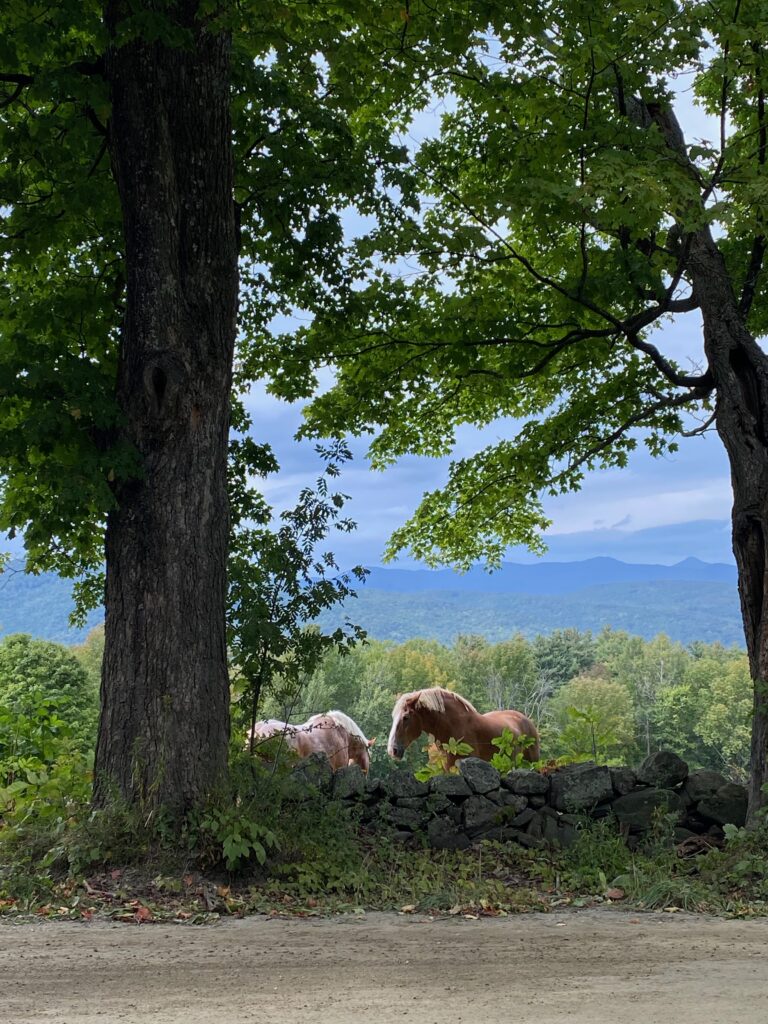
As some of you know, over the past months of Covid related changes, I have stolen more time to read and have done a deep dive into the works of John O’Donohue. If ever there is a writer who tackles the concept of “threshold,” it’s O’Donohue, and I urge you to make his acquaintance. He often speaks of duality, opposition and the striving for balance. “Duality, then, is informed by the oppositions that meet at this threshold. I would argue that an authentic life is a life that is aware of and willing to engage its own oppositions, and honorably inhabits that threshold where the light and darkness, the masculine and feminine and all the beginnings and endings of one’s life engage.” (Walking in Wonder by John O’Donohue, Convergent press, 2015)
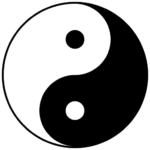
As a Yoga instructor and practitioner, I am in love with Yoga itself, the physical strength, mobility and stability benefits, and the mind-body connection. In my teaching I encourage all to balance the Yin and Yang in their Yoga practice, sports performance, daily life, etc and to become aware that these are not competing forces, but necessary opposites that integrate, support and find equilibrium in us physically, mentally, emotionally and spiritually.
“Genuine spiritual practice offers a way to face both our inner and outer worlds and to bring these two related realms into living, loving dialogue.” (from tricycle.org; Gaylon Ferguson, “Natural Bravery”)
I did hear a few complaints of boredom after the lockdowns of spring. For the most part we found ourselves busier than ever sourcing food and supplies, learning coping mechanisms and how to protect our families, teaching our kids, and for so many businesses, how to remain viable when all but essential workers showed up via Zoom or other internet platforms.
Busyness has taken on new meaning. So has selfcare. There was a time when selfcare was for the individual with abundant funds and time to spend at the spa. No longer. Now we honor the concept. Selfcare precedes care of others and without it reserves of generosity and service empty too quickly. Selfcare underpins effective action and softens the edges of tolerance. Selfcare multiplies patience and gives value to connection.
And just how does threshold play a part in all of this? There is all too often an inherent resistance to selfcare. Perhaps there is a mental boundary keeping us from doing for ourselves, investing in stress relief or strength and energy production. Maybe, just maybe, that boundary could be observed as a threshold – a line between time or space, to be sure, but a line that encourages transition to cross it. Like the stone wall separating the horses from the road, that line just maybe will discourage anything that might devalue or intrude upon our time of selfcare.
At the beginning of each day, as we cross the threshold from sleep to wakefulness, may we do so knowing that at some point when we need it most, we will step over another threshold into that which will renew, settle and free the flow of energy and goodness within us so that we may begin again to reach out to those in our lives and do whatever needs to be done. May your personal threshold say “Well Done!”
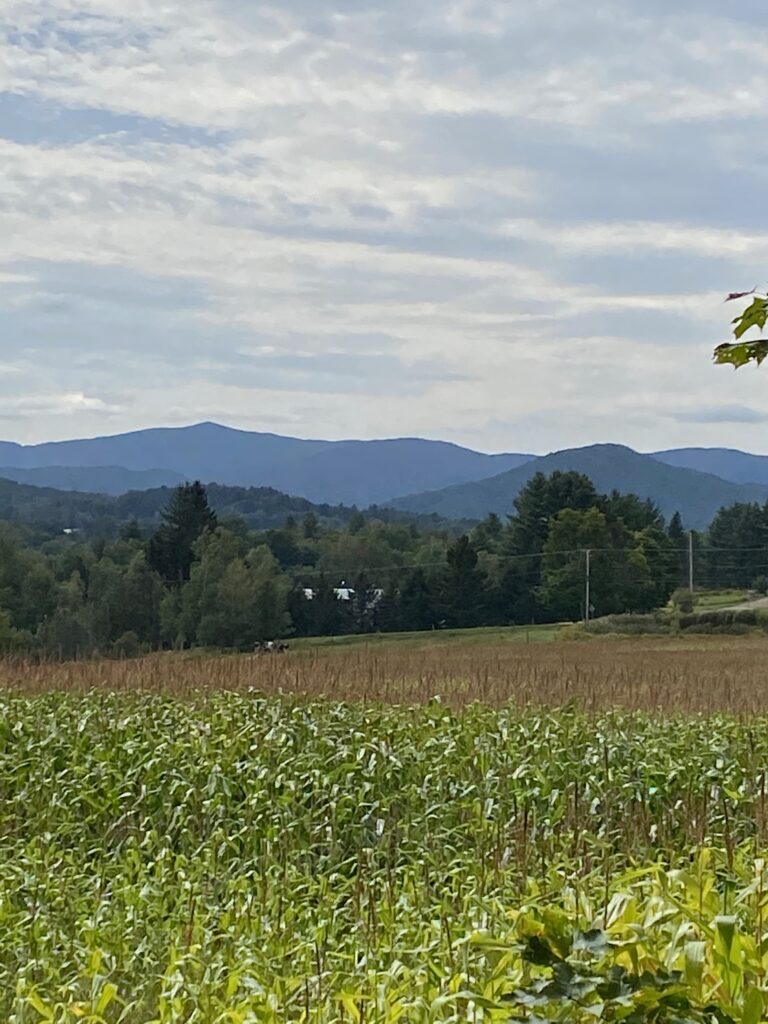
Seasonal changes offer nature’s threshold into what is to come.
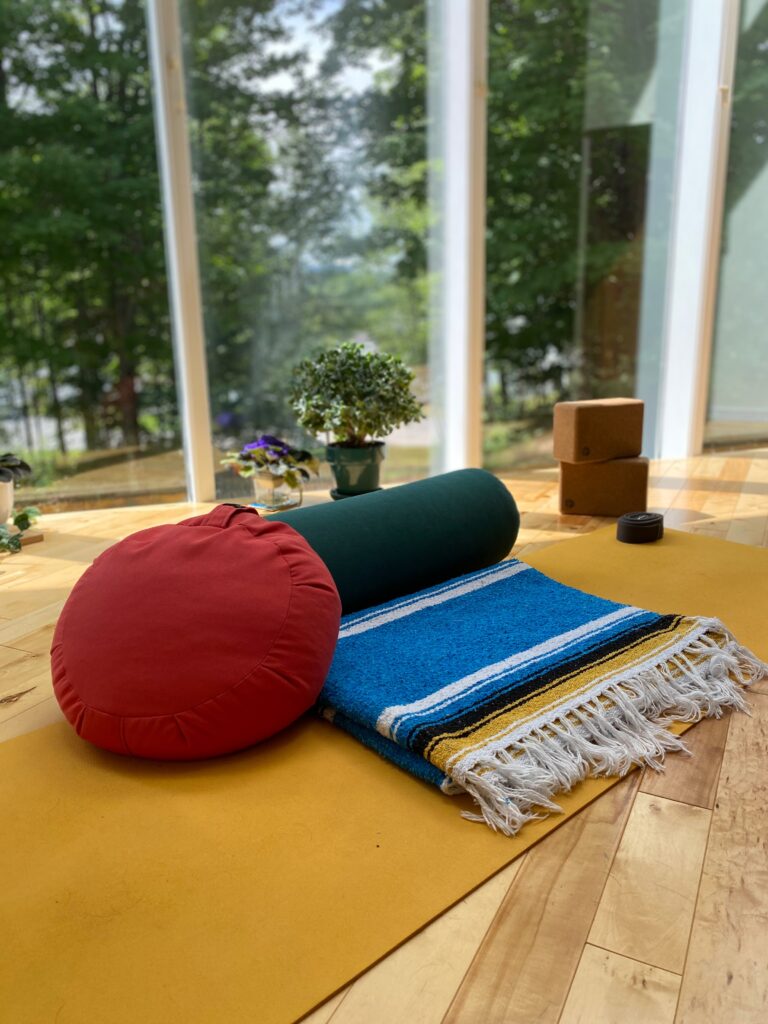
 There is no question that this business is forever changed. Numbers tell the story. First there was the initial reluctance assuming that things would return to normal in a few days or weeks. Then there was surprised enthusiasm for streamed classes in which participants could actually visit with each other prior to and after the class. Noting the value of this, many who started on Facebook made the move to Zoom. For awhile, it took off. And then the numbers began to decline. Students no longer prioritized their class times and somehow just didn’t get around to opening the link to the recorded session. The HABIT, and yes, jumping on a Zoom call for a Yoga class became a new habit, was weakened if not broken and Zoom Fatigue became a reality.
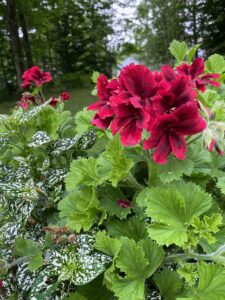 Thich Nhat Hanh said: “If you want a garden, you have to bend down and touch the soil. Gardening is a practice, not an idea.” Well, there you have it.

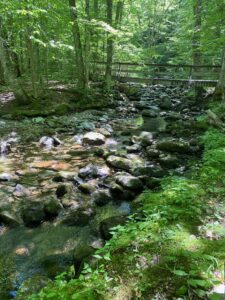
 Community has been redefined. Even the tiniest connection – a phone call or text, photo or face time, card or package – is duly appreciated forging bonds replacing tenuous strands. And in my own small (there’s that word again) world of Zoom, those minutes of unmuted video before and after a teacher-led practice are golden; they are fun and sensitive and compelling moments of genuine community.
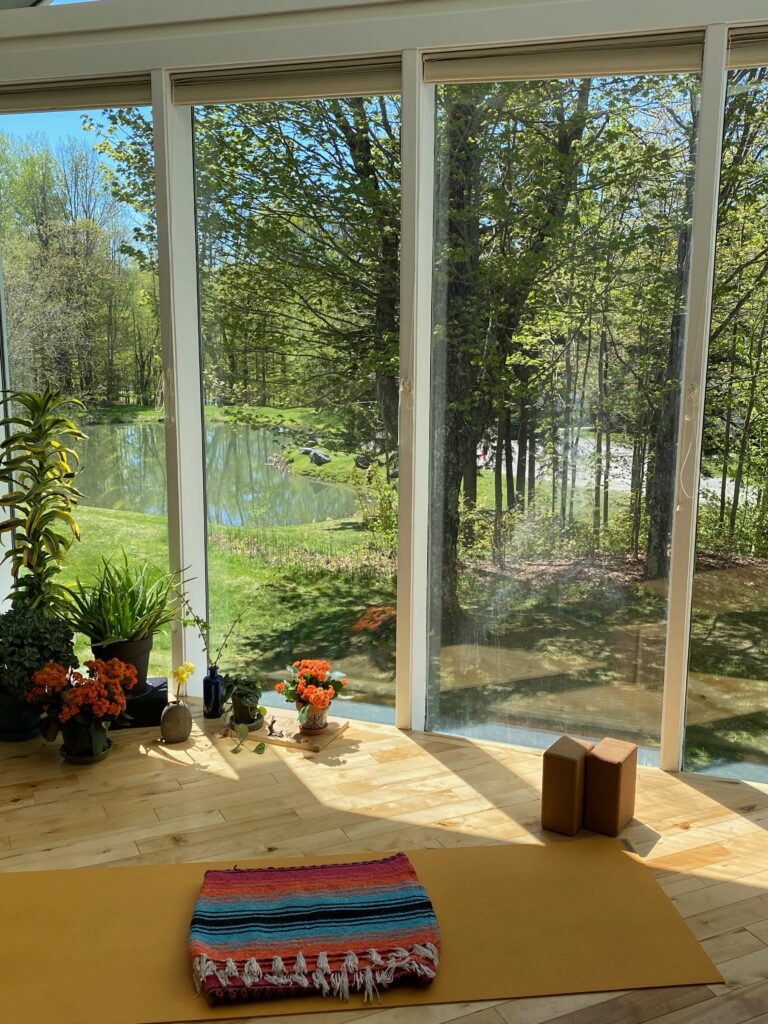
 As I write this, the strands of the tightly laced corset of a National response to the pandemic Coronavirus of 2020 are being loosened. Unprecedented. Social distancing. Refrigerated trucks. Protest. Connection. Zoom. Essential. Quarantine. Hoarding. Generosity. Curbside. Antibodies. And my personal favorite: “Anthony Fauci has been nominated as sexiest man of the year.” Not only is the Coronavirus “novel,” daily life is about as novel as it gets.
 The concept of THAW is pretty simple: what is hard or frozen softens or liquifies in the presence of warmth. When THAW = MELT one can explore myriad possibilities and implications – physically, mentally and emotionally.
 When the thermometer rises, the winds blow and the rain pounds down in Northern New England, plans change abruptly to include flood warnings, power outages and just plain disappointment. As I write this, it is January 11 and there is, of course, the notion that this is simply our “January thaw” for this year. On the other hand, with all the horrific weather events that we’re (almost) getting used to, and the fact that this is, what, our 6th thaw this winter (?), is this alarming? At best, though it gives us pause. In spite of the ever-present threat of the possibility of damage or danger caused by irresistible forces of nature, there is relief from biting cold and an almost playful tease in the air. (60 degrees? Really?!)
 Today, while Sophie, my Chocolate Lab, and I took an unusually long time to travel an unusually short distance trudging our usual trails, I had plenty of time to laugh at her as she found opportunity to make a game out of just about everything. I also pondered the word THAW. Playing with shades of significance is an organic game. Toss a pebble (word) into a pond (mind) and watch the ripples (ideas) flow and expand.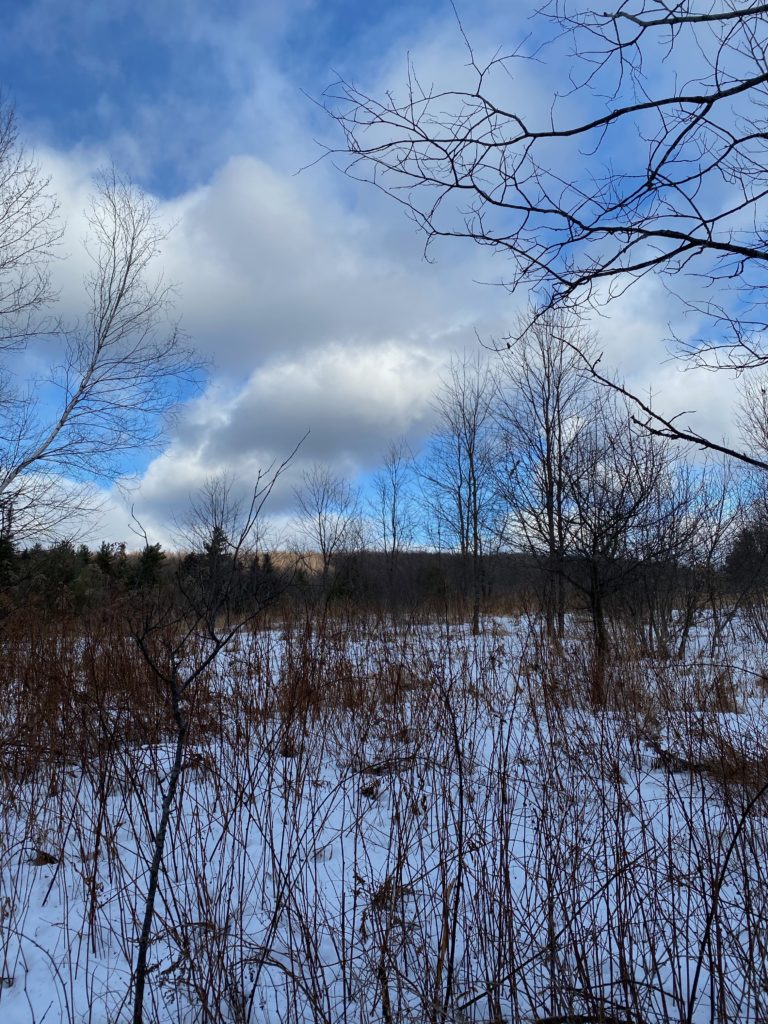

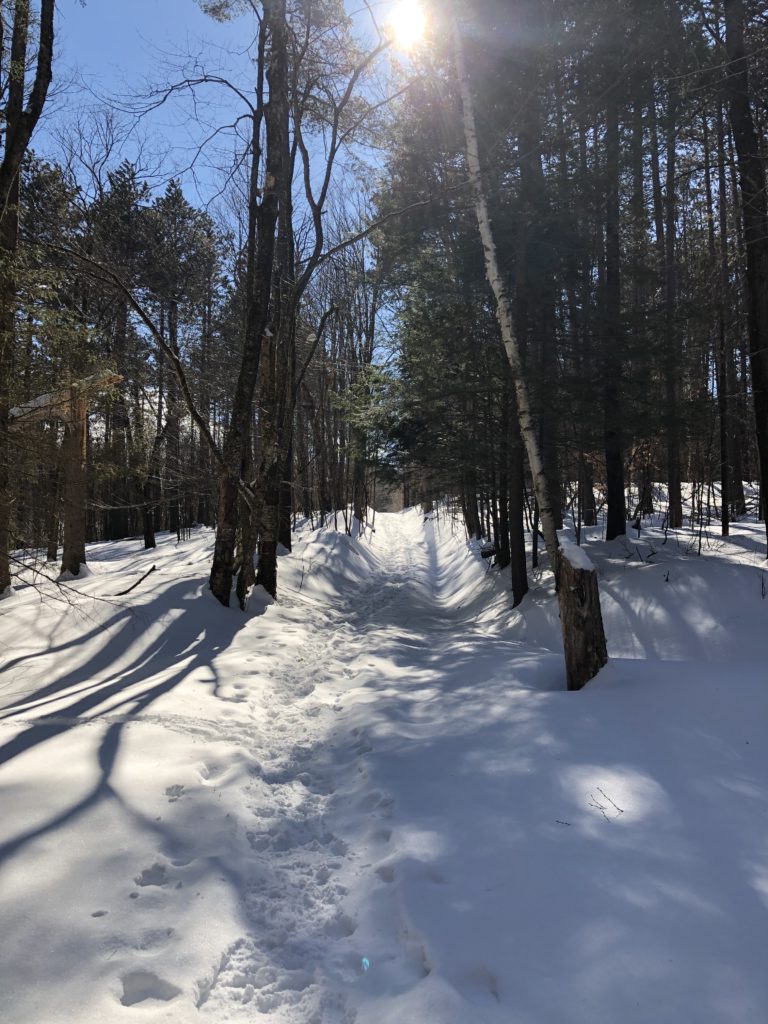
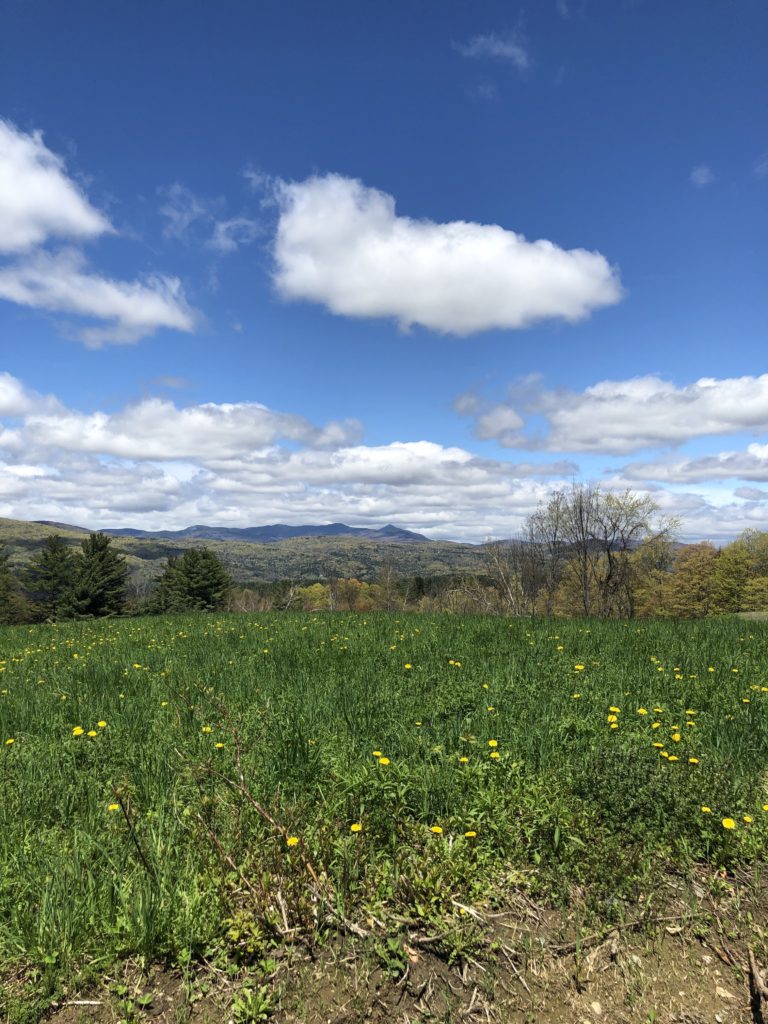 How sunshine affects one’s fitness level is obvious, but significant in definition. It is patently apparent that a good, sunny day puts a spring in our step and lures us outdoors to participate in a variety of healthy activities that might have seemed drudgery on a different day.
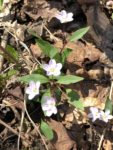 But the notion of new growth budding and blossoming and all that it represents is a notion to hold dear. Each new morning is the springtime of a day. Each new idea, each new adventure, each new connection is the onset of creativity and ultimate fruition.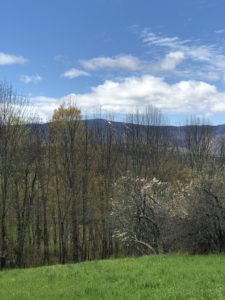
 Yoga Teacher Training has found itself in the spotlight and presumably would be happy not to have done so. This, from a client, just arrived in my inbox:
  And then came my introduction to Yoga, just 3.5 years ago. Almost immediately thereafter I pursued my initial YTT believing that, though I had little interest in teaching, that would be the best resource for learning as much about Yoga in an intensive fashion as possible. Over a year later I completed my training, but in the meantime had found yet more exciting Yoga training which I jumped into with enthusiasm. Let me say here that I am deeply indebted to all the teachers with whom I have studied. (especially Terry Cochburn, Josh Summers and Sage Rountree,). Clearly my personal experience colors my opinions to follow.
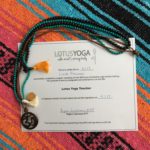 Perhaps if a student enters YTT with a background in exercise science or something similar, 200 hours will provide a good foundation. In my own experience, I began with decades of training and professional practice , but little to no experience with Yoga. Yes, I learned many asanas and how to teach them. My 200 hour teacher was generous in teaching the principles of Ayurveda as well. What I was left with was a growing confidence teaching the physical components of Yoga practice, but in awe of teachers who were able to delve so deeply into the other and more spiritual aspects – you know, all about Patanjali, etc. My own training was very generic as my teacher did not want to label her teaching as one school of Yoga or another. I am grateful to her for that.
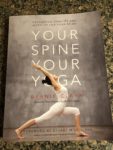 The absolute beauty of working with functional alignment is that practice and teaching are ever new, ever freshly creative and energized.
 It is about lifestyle, balance, medicine and spirituality just as much as it is about strength and flexibility. As you go to your mat, my recommendation is to make your Yoga your own. Whatever upheavals may rage in the Yoga community (and there are more than just ‘200 hour’ arguments!), leave them, for awhile anyway.
 But just what is meditation? Is it as vast and unattainable as it appears? I am one of those who prefers an academic approach to any subject. In a lecture, I am the one scribbling madly trying to capture every word being said (and often missing the meaning in the process; yes, I know). I am the one who wants clear definitions. I want to know what skill sets are required and how to obtain them. I want to identify progress and see an end result.
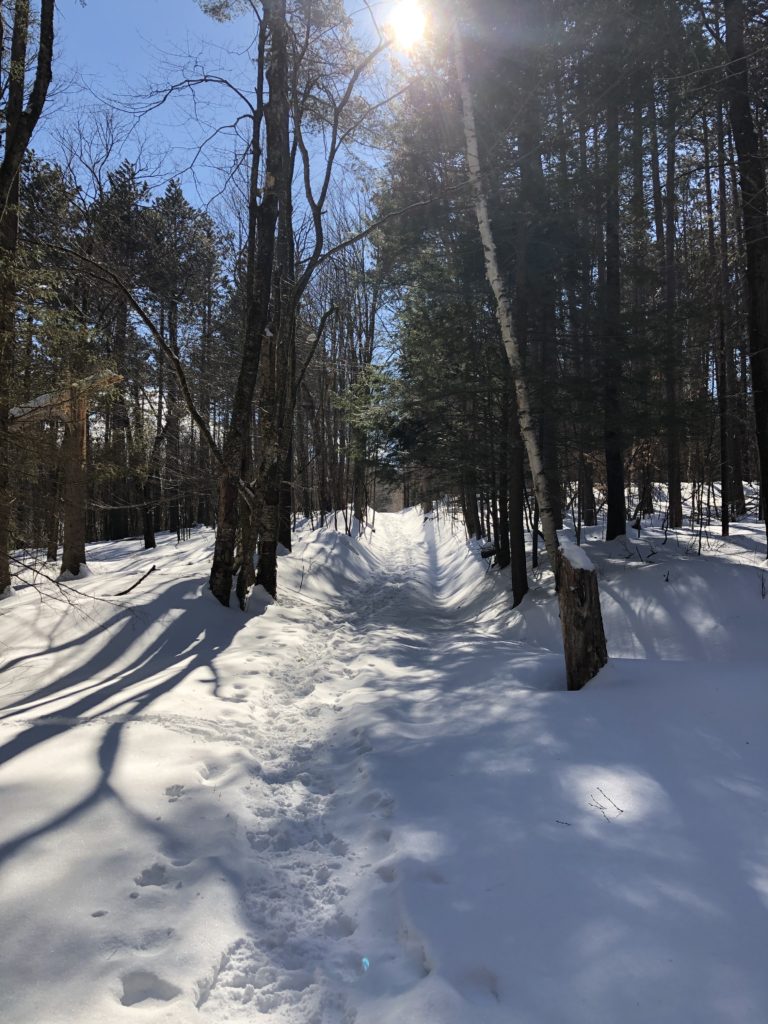
 My 20 minute morning practice: I took my seat in front of my wall of windows looking out at the snow covered landscape that lights up with morning color as the sun rises. My dog and I had already been for a walk and I had already had my first cup of strong coffee, so was ready to get down to it. But today, though physical stillness was, as usual, my go-to, my mind was active. So, I decided to “notice.” I noticed the warmth of my sleeping 65 pound dog as she tried to become one with my body. I noticed the increasing brightness beyond my closed eyelids. I began to think that just a week ago I was sitting in a studio doing just this in the company of a dear community.

 This snow will melt. There will be more. Flexibility will always be needed. May we all have the energy, strength and courage to move with life’s changes and challenges in a way that is most beneficial to ourselves and others. May we all always be practicing students.