EMILY DICKINSON, JANUARY, the FULL MOON and MARTIN LUTHER KING, JR.

January, the Full Super Blood Wolf Moon, (phew, that’s a mouth full) and honoring Martin Luther King, Jr. serve to remind us of challenges, transformation and potential. Where does Emily Dickinson come in? Right here: “I dwell in possibility,” she said. As do we all.
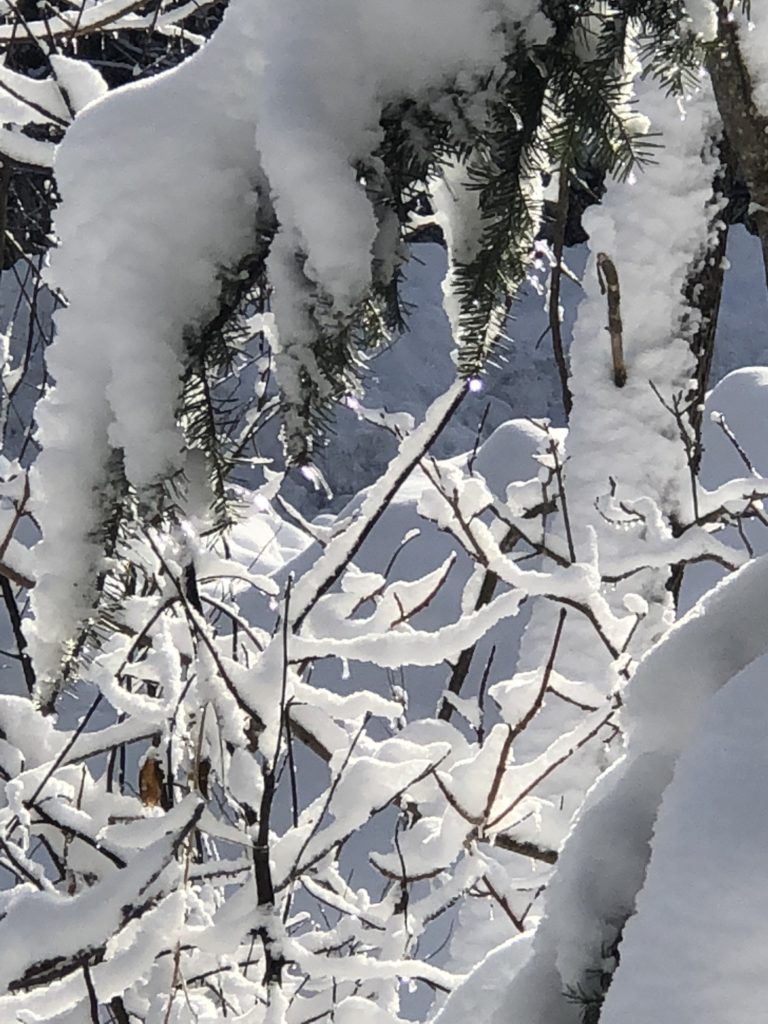
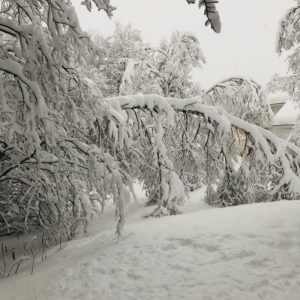
I write this post on January 20, 2019, as snow falls heavily with the promise of much more to come – exhilarating news for snow sports athletes and daunting news for commuters. It is also a holiday weekend decorated by a full moon (if we will see it, that is). Let’s unpack all this together.

On 12-30-12 I discussed JANUARY in the Rutland Herald and Times Argus. Here’s part of what I wrote:

“Janus is the god of beginnings and endings, of transitions and of time itself. The two-faced head of Janus often crowns doors and gates with one face looking back and the other looking forward. Is this not what we are doing at this time of year: looking back over the year that has just passed and looking forward to the year ahead?

An interesting aspect of the Janus head that I recently observed is that each face is the same. One is not looking forward with furrowed brow or looking back frantically as if to say “where has the time gone?” Both faces consider what has gone before and what lies ahead with equivalent composure.

I don’t know about you, but I am a firm believer in history. Yes, there is history to be revered, individuals to be honored. There is history made up of dates and wars. There is history made vibrant by inventions and discoveries. The history that intrigues me begins with the development of cultures and communities. What benefits us immediately, however, is our own personal history.

Within the context of the spiral theory of history in which history repeats itself and what came around once will surely do so again, we can look to our own personal history to see what lessons we have learned and what we might do differently. After all, as somebody once said (it is usually attributed to Einstein) “the definition of insanity is doing the same thing over and over and expecting different results.”

Within the context of fitness and training, history provides important information of one’s progress. Dedicated efforts result in diminished limitations and increased capabilities. Weakness develops into strengths, skills are acquired and goals are either scored or reached.

Best of all, there is a history of immediate feedback related to one’s dedication, one’s efforts. Become sedentary and our body and health will bottom out. Continue our efforts to exercise, fuel appropriately, live healthfully, and train for our sport or activity of choice and we see positive results over time. We can look back on interaction with others, the evolution of like-minded individuals enjoying the benefits of community. Bodies and minds are enhanced. Enthusiasm is nourished. Energy multiplies.

Confidence, born of experience, gives us a powerful tool upon which to rely. History allows us to dream, to formulate achievable goals, to make a bucket-list and then to stretch ourselves in pursuit of what we identify as important to us”.

Today we anticipate a rather spectacular lunar event. This particular Wolf Moon (January moon so named to suggest the howling of wolves in winter) will be a huge super moon and because of its proximity to earth may emit noticeably stronger energies. About 9:30 p.m. EST we might watch the eclipse and comprehend why it is also called a blood moon. Shortly thereafter the moon will reach peak fullness.
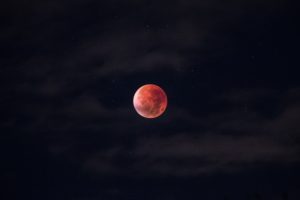
Is there significance to this confluence of events? “Lunar eclipses are often associated with change, mystery, and upheaval.” (Tempest Zakroff) Another writer, Mickie Mueller, suggests: “As this one coincides with the first full moon of the regular calendar year, it’s a good time to contemplate what things — ideas, habits, practices — you may wish to leave behind, and what you want to bring into your life and build upon for the year to come… It’s a magical reset button.” Might this be a good weekend to reevaluate our New Year’s goals and resolutions? Are we on track? Might we need, in wisdom, to rework those ideals and restructure our coming weeks and months?

Because I write in the venue of fitness, health, and well-being, I tend to translate what I encounter as applicable to the same. For example, I learned that the full moon is a call for balance. OK, physical balance is a no-brainer but so is balance in all aspects of our training and life experience. I hear that an eclipse represents power and fruition and can be transformative. Ditto.

Finally, I have brought Martin Luther King, Jr. into this equation. Why? Well, of course, we active individuals love having an extra day off to go do something and this year we can go play in the snow. More significantly, however, it is a time to pause to honor history: past, present, future, personal and universal.

We all know of MLK’s “I have a dream” speech. But time spent on your favorite search engine will provide hundreds of pithy, compelling quotes. I will close with a few for you to apply as you wish. Consider your personal “possibility” (Dickinson), reevaluate your personal experience, and move forward on your personal path.

“No person has the right to rain on your dreams.”

“Whatever your life’s work is, do it well. A man should do his job so well that the living, the dead, and the unborn could do it no better. ”

“Not everybody can be famous but everybody can be great because greatness is determined by service… You only need a heart full of grace and a soul generated by love.”
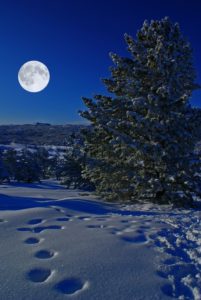
WINTER SOLSTICE

Solstice, sun standing still, happens December 21, 2018 at 5:23 p.m. There’s a boatload of science behind this precise moment, but there’s also a great deal of myth, poetry, anxiety, practicality, paganism, and just plain opportunity to celebrate.

SAD (Seasonal Affective Disorder) is another story entirely. For most, eagerness for more daylight is a common denominator. There are practical issues such as light for the morning commute or not arriving home in the dark after work. There are visibility concerns for kids waiting for school busses or pedestrians along city streets or country roads. And, perhaps the worst for those of us who crave outdoor activity, is that daylight affects, if not controls, our time outdoors. There’s only so much we can do with headlamps! Even our pups grow cranky or overweight with less action and we, their guardians, must find creative ways to keep them exercised mentally as well as physically.

There is also the good news about longer periods of darkness. Used properly, they gift us with time – time to linger over a meal, to read a book, work a puzzle, or finally reorganize that closet or maybe even catch up on paperwork (I guess I should say email). Just as farmers traditionally mended harness and repaired machinery over the winter months, so, too, these indoor hours encourage repair and restoration of sports equipment, furniture or whatever we have put aside as we darted out the door last July.

Nor is it all about darkness. What’s wrong with night skiing or skating at lighted venues or a moonlight snowshoe? (Perhaps the only caution here is to be certain of the route, let someone know where we are going, and please try not to get lost and tax a local rescue team. Maybe now is the time to learn how to use one of the many apps guaranteed to keep us from doing so!)

But back to Winter Solstice. Some things I learned from a Google Search:

Ancient peoples whose survival depended on a precise knowledge of seasonal cycles marked this first day of winter with elaborate ceremonies and celebrations. Spiritually, these celebrations symbolize the opportunity for renewal, a casting off of old habits and negative feelings and an embracing of hope amid darkness as the days once again begin to grow longer.

[Perhaps this is why the Winter Solstice is followed so closely by New Year’s Resolutions….]

And, did you know this? The solstice this year will be extra special because it will be followed the next day by a full moon known as the Cold Moon, and you might be able to see a meteor shower to boot.

And, finally, a few words to ponder: “I will love the light for it shows me the way, yet I will endure the darkness for it shows me the stars.” (Og Mandino) 
ENERGY, STRENGTH & COURAGE

An athlete, (and here I include anyone who strives for fitness and well-being), is familiar with words like energy, strength and courage – as well as concepts of power, force, endurance, patience, effort and performance.

Flexibility is another one. We make our plans, structure training and when something topples that structure, are required to become flexible in more ways than physical. For me, today was one of those days. Beautiful though it is, a heavy wet snowfall cancelled my work-day but gave me time to pursue studies.

As a student of the Summers School of Yin Yoga (https://joshsummers.net/school/), and, preparing for an upcoming week of training in “Mindfulness,” I am about halfway through reading Joseph Goldstein’s “Mindfulness, A Practical Guide to Awakening.” Often my study requires mental discipline. Sometimes I set a timer for one hour and force myself to persevere. Physically it is an effort to remain seated for that period of time and to exercise patience with myself. But the study stealthily creeps into my thinking and I find myself revisiting bits and pieces and, my favorite exercise, flip to the Index to pursue more pages about a word that has teased my interest. Ultimately I suppose I could say that my performance is enhanced and I am empowered to take the next step. Hmmmm.

This morning, after my timer had jingled, I hop-skipped-&-jumped through the citations pertaining to energy. So, let me ask you, have you ever deliberately connected these three words: ENERGY, STRENGTH & COURAGE? I guess on some level we have all assumed that they relate. However, let me share with you a few sentences of observation written by Goldstein who

suggests that “Energy (viriya, in Pali) is the root of all accomplishment….and is the capacity for activity, the power to do something. This energetic capacity, the power to do, manifests in a variety of ways.”

Strength, therefore, is the power to do, a “channeling of energy for the development of wholesome states of mind….” Courage, at first an unlikely companion to energy and strength, “powerfully energizes our heart as we walk on the path.” And here might be the crux of the matter: “Courage is energized by challenge; it is inspired by difficult tasks and even seeks them out. When courage is present, we rise to meet different challenges for the sake of what we want to accomplish, and we’re not discouraged by thoughts of hardship or by the length of the undertaking.”

We are all familiar with exhortations to play with our edge, move outside our comfort zone, achieve balance in all things, yadayadayada. But here is something we can sink our teeth into. Use energy purposefully – perhaps not as if driven, but as if seeking. Support our energetic endeavors with moral, mental and physical strength and perseverance. Utilize courage to embark, continue and perhaps complete. Rather than imposing limitations upon ourselves based on an inadequate assessment of what we are capable of, after choosing a course of action, do so with “qualities of interest, willingness, and the courage to explore. It is not a question of ‘should’ or right and wrong.”

Thankfully we are all students. There is so much to learn, ponder, process, practice and either embrace or discard as something that is not inherently bad, but as something that is no longer useful to us.

This snow will melt. There will be more. Flexibility will always be needed. May we all have the energy, strength and courage to move with life’s changes and challenges in a way that is most beneficial to ourselves and others. May we all always be practicing students.
YIN & YANG; ATTENTION & INTENTION

Yin and Yang = balance; Attention and Intention leave no stone unturned.

When one considers how long the practice of Yoga has been in existence, my own study might be called neonatal. For fewer years than the fingers on one hand, I have, almost daily, rolled out my Yoga mat and attempted some sort of practice. Like many newbies, I was attracted to the physicality of the poses (Asanas), the flow (I do love a Vinyasa class), and the beauty of the practice itself.

Because it is my habit to do so when learning a new skill, I went straight to the venue of teacher training in order to learn as much as I could of the technique and philosophy. It was the right thing to do. First I studied Yoga for Athletes at Kripalu with Sage Rountree. Then I leapt eagerly into 200 hours of Yoga Teacher Training with Regina Trailweaver at Lotus Yoga in Vermont. After becoming certified, and along the way, having met a teacher who would ultimately become exactly the right teacher for me, I chose to pursue advanced training in the study of Yin Yoga. I am currently working through an additional 300 hours of training with Josh Summers and Terry Cockburn, Summers School of Yin Yoga.

OK, so these are simply dry stats. What these studies are doing for me is beyond explanation or definition. It is truly humbling to realize that teachers before me have continued to study, learn, practice and teach for literally decades and still suggest that they have only begun to scratch the surface of what we call Yoga.

Though there are many forms of Yoga being taught in today’s world (a huge subject for another blog post), there seem to be a few universal truths. First of all, as a student of both Yin and Yang Yoga, I believe it is important to balance our Yoga by practicing both techniques. I now know that Yoga envelopes far more than simply the physical Asanas. In fact, as you may already know, early Yoga practice thousands of years ago was designed to aid meditation and was comprised of one action (or inaction) – sitting for long periods of time. Today, Yoga classes range physically from the proverbial sublime to the ridiculous – though I guess if it works for you, nothing is ridiculous! More and more Yoga students stretch their bodies, minds and emotions mingling bodily attainments with spiritual seeking. Mind and body clearly connect, support and sustain.

Coming to Yoga from a professional personal training and athletic background, I am excited by the relatively recent emphasis on functional alignment. Years ago in the gym, after gleaning far more information about the human body and how it works, we first moved away from traditional training to eagerly embrace the new and exciting approach to training as “functional.” A little later the pendulum swung back to more of an integrated form of training, but the wisdom and pragmatism of functional training stuck.

It appears that Yoga technique may be journeying down the same path. As injuries have stepped into the spotlight, more teachers and practitioners look to making adaptations to strict alignment, which, albeit aesthetically pleasing, might not work for all bodies as all bodies are certainly not the same.

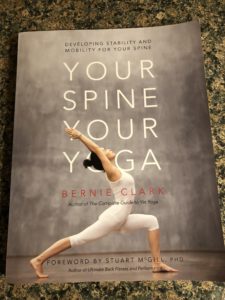
Bernie Clark, a leader in the field of Yin Yoga, (www.YinYoga.com) has recently published the 2nd of his trilogy of books serving as detailed texts on the science behind the Yoga-practicing body. Clark urges the reader to know why he or she is practicing Yoga. What is your intention? Why are you even stepping on the mat? Whether considering a particular pose or thinking of the practice as a whole, what do we want from our efforts? Are we seeking spiritual enlightenment, a body that could grace the cover of Yoga Journal, increased energy, improved sports performance, or maybe physical health and well-being coupled with mental and emotional balance and stability? Will we even recognize it if we begin to reach steps towards achieving our goals – that is, if we have defined them?
Clark puts it this way: “One of the great gifts of yoga is the ability to attend–to notice what is happening right here, right now, in your body, in your heart and in your mind. By paying attention and comparing what is arising with what you intend to arise, you can make a skillful, conscious choice to either accept what is or change it, based on whether or not what is arising is helping you achieve your intention.” (Your Spine Your Yoga, Bernie Clark, Wild Strawberry Productions, 2018)

Yin and Yang = balance. Intention and Attention leave no stone unturned. Teachers who teach best are eternal students. Students who question approach learning with healthy curiosity, receptivity and the daring to taste and test change.

Many years ago as a student at Johns Hopkins University I was both horrified and fascinated by graffiti found on a brick wall on the Homewood campus: QUESTION AUTHORITY! I was, and somewhat still am, a rule-follower. Yet the memory of those two words continues to affect my thinking. Theory should work. Practice is its proof. In Vermont we like to say, “If it ain’t broke, don’t fix it.” Perhaps another take on this would be, “If it ain’t working, fix it!”

Question. Test. Adapt.

Walk into a Yoga studio. Step onto your mat. Begin your practice. Notice. Notice how you feel and what you feel. Notice the room in which you practice and the bodies around you, each beginning his or her own uniquely individual practice. Notice the connection you invariably feel with those in close physical proximity and with those who you instinctively know you have connected mentally and emotionally. Notice that spirituality is a living, almost palpable thing, an integral part of your practice. Attend.

A friend suggested that I go to www.Tricycle.org and sign up for Daily Dharma.

Here’s one you might like: “Grace provides the framework within which a meaningful life is lived. Love is the substance of it day to day. To live a spiritual life, then, is essentially to do things ‘for the love of it’-to do things without attachment to a result or reward.” Dharmavidya David Brazier.

May we all practice Yoga ‘for the love of it,’ safely, effectively, profoundly, physically and spiritually. Yin and Yang = balance. Intention and Attention leave no stone unturned. Question authority. Do all, receiving and sharing Grace. Namaste.

AFTEREFFECTS OF TRAINING (and Yoga) LAST FOR HOURS

There is a phenomenon, sometimes called the “afterburn” and sometimes referred to by a more official sounding title, “excess post-exercise oxygen consumption,” or EPOC. Simply put, when you exercise (here the intensity of your training is relevant), your heart rate, oxygen consumption, metabolic rate and thus calorie burn are elevated. The minute you walk out of class, step off your bike or kick off your running shoes your system does not dive to the level prior to working out. Surely you remember that it took time to stretch, breathe and gradually shift gears in your remarkable machine of a body in order to get it to perform at full capacity, or at least efficiently. It makes sense, then, that it would take an extended period of time to do the reverse. It’s a lovely bonus that your fit and tuned body will continue to crank it out even after your reps or miles are done. A bonus, as well as a strong incentive!

Today as I closed my Yoga class, I offered my students an ineloquent prayer or wish for them. “Your Yoga does not end with Namaste. May your practice – physically, mentally, emotionally and spiritually – go with you through the remaining hours of this day.”

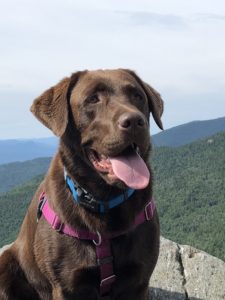
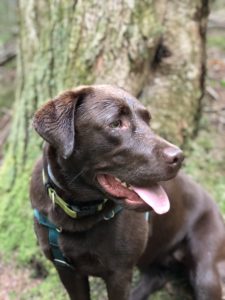
I thought about what I had said a few hours later as I walked through the woods on trails wet with rain. Years before I would have been snug at home with a book (or maybe my computer) and a cup of tea. These days, however, my Sophie gets me out there and by the time I stop whining at her I realize I’m so happy to have done so!

Sophie.

On one hand, I watched with interest as my young Chocolate Lab raced through the woods chasing birds (good luck with that), chipmunks, and all sorts of imaginary or otherwise creatures. (I’m so proud of this girl – she comes right back when she flushes out a deer. We know there are bear(s) out there but so far so good and I have no idea what she will do. Practice recall. Practice recall. Practice recall.)

On the other hand, the slippery roots, muddy patches, and dense yet soundless dimness of the woods guided me back to my morning Yoga practice. I was ‘taking my practice with me through the remaining hours or my day.’
Because I am a dedicated student of my teachers, Terry Cockburn, Freeport Yoga Company, and Josh Summers, Summers School of Yin Yoga, I borrow heavily from them. Periodically I will “workshop” a particular asana or principle, stopping to spend time to explore a shape, identify target areas, and practice execution suggesting appropriate functional alignment. (There’s oh so much to say on this particular subject – but that’s for another day and another post.)

I urge my students to consider their own anatomy, discover which of several possible target areas they address, and then, the big question – “what do you feel?” Yes, when one has taught, studied and observed bodies for many years, one can sometimes have an educated opinion of what a student might be feeling. However, the bottom line is NOT what you, the teacher, thinks, it is what the student feels!

Think of it this way. Say something very sad, or even traumatic, has happened to you. You are emotionally exhausted and broken – say the death of a family member, a broken marriage, or a terrible accident. Someone you meet offers compassion and says ‘I know exactly how you feel….’ You want to shout back at them ‘NO YOU DON’T!’ Enough said.

To accompany that bottom line is the equally important objective to help our students become informed about their bodies, movements, and potential. A commonly accepted concept in the practice of Yoga is to be able to know one’s “edge,” and to work towards and with that edge within a given practice. To be a student is a marvelous adventure and one that thankfully never ends. I encourage all Yoga students to read, study, practice, experience and learn, learn, learn about each individual uniquely precious being that he or she is!

So, see? I was thinking about all of this as I walked. (Fortunately I didn’t trip over anythingJ)

Yogic principles can be applied to so many situations. Physically one can seek strength, balance, endurance and a means to meet and complete tasks and challenges. Universally Yoga teachers often begin classes by encouraging students to “set an intention.” Perhaps that intention is to work with the concept of a target area or a level of intensity. For example, when I head out with Sophie I try to take that idea with me and set a goal for the day’s activity – sometimes a strenuous hike (I do live in Vermont and I do love those rocky climbs above the tree lines), sometimes distance, sometimes off-leash playfulness with fartlek for me, sometimes on-leash controlled pace, sometimes a run, sometimes, like today, just a walk in the woods. It’s all good and it’s all better when you know what your goal, your target, is.

Mentally, emotionally and spiritually taking time to absorb your surroundings, notice your breath, stop to watch a sunset, calm anxiety with trust, reach out to others in loving kindness and tolerance. Such thoughts are so possible and somehow easier to embrace while moving and “practicing” Yoga throughout the day.

Don’t allow rain and mist keep to distort your vision.

By all means, roll out your mat and give yourself the necessary gift of a Yoga practice (or a fitness training session), and then, when you have considered your purpose/goals/target areas/intention, let them guide you through your practice and on, as you step off your mat into your day.

A SILENT MEDITATION RETREAT IS INDEED AN ENDURANCE EVENT

I was counseled that a Silent Meditation Retreat is an Endurance event and so it is. Let me compare:

In the days, weeks and months prior to the event, there is periodized training that culminates in show-time. Mentally and physically the upcoming event takes center stage and preparations are made to ensure the best possible performance.

Tapering ignites anxiety and eagerness, doubts and concerns, anticipation of the as yet unknown. Bags are packed, gear or tools are checked and double checked. An endurance athlete may well have run the marathon, raced the ultra distance trails or cycled the century route before, but each time is always a confluence of new conditions.

Then its time to begin. You want to either turn around and run away, or explode over the start line. The gun goes off and you’re in it. There’s no turning back and at this point you really don’t want to. You’re a trained athlete/meditation practitioner so you get right down to it. You find your pace or position. You begin – not too fast at first, not too aggressively – to build your momentum. As an athlete, you kick out that initial anaerobic rush and level off in what will be a sustainable aerobic pace. Meditating, you find stillness, perhaps begin your practice with the help of a guided technique, then settle more deeply into stillness.

But let’s take this analogy to a slightly different place. Lets consider the endurance event, say a timed century (been there/done that-many times) with an entire week of silent meditation and Yin yoga practice (been there/done that as well).

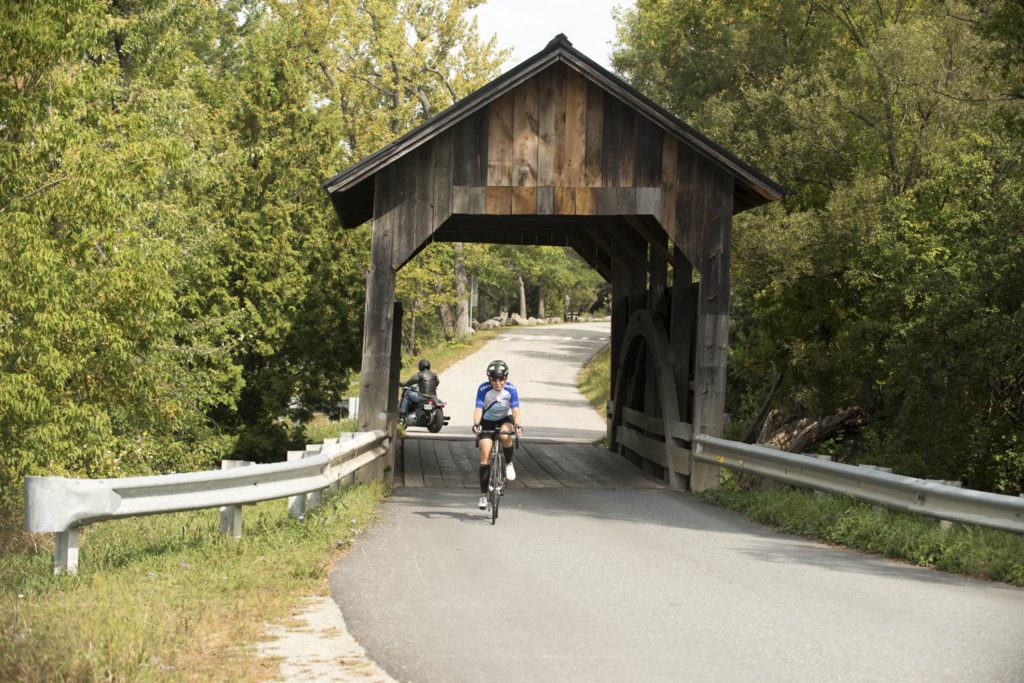
Kelly Brush Ride, Linda Freeman through the covered bridge, Middlebury and Addison County Vermont, September 12, 2015. Photography by Caleb Kenna. Coincidentally, as I write this post, the KB ride is coming up in a few days. It was my first century, and about 6 years later possibly my last and definitely my fastest (over 2 hours faster!). It is a ride and a cause dear to my heart and epitomizes my cycling soul.

Mile 0-10. Ouch. That first hill really hurts. I’m breathing so hard – will I ever catch my breath? Ahhhh, a downhill….

Day .5 -1. OMG this is awful! It is so so hard! What was I thinking to actually choose to do this? What time did you say it was? Day one? Really?

Mile 11-40. OK, I want to push a little harder here. I am determined to better my time and send better stats to my coach. Raise those Watts a bit and lower the HR and continue the drive across the top and into the downhills…. Commit.

Day 2: I don’t think I can do this. I want to go home. I hurt physically and my head is tired from moving so very slowly from minute to minute. Simply waiting for the bowl to sound at the end of each meditation period takes more energy than I possess. This is so truly a friggin’ sufferfest…. But, I did Commit.

Mile 41-60. Are you kidding me? Is that all I’ve done? I’m getting tired! I keep forgetting to drink enough. My butt hurts. My mind is wandering. My right gastroc is threatening to quit on the next climb, maybe today is just not my day…. But, recommit.

Day 3. This is it. If it doesn’t get better soon I can’t guarantee the results. Even my stomach hurts. I decided to fast from the noon meal until breakfast. Maybe that will help. And then – there was small group. It was the turning point. I’m not the only one. Meditation can also mean to “just sit”. Recommit.

Mile 61-80. Just do it. Do not give an inch. Technique, fueling, breath. Do not lose focus. Watch that white line.

Day 4. Just do it. Take hold of what is happening and move forward. Do not entertain doubts or self-criticism. Watch that strip of grass when walking down the path.

Mile 81-90. Rededicate. Power into the climbs. Pass anyone you see ahead. Breathe. Stay centered and calm. Focus on each pedal stroke. This is not the time for an adrenalin rush.

Day 5. Rededicate. Patience. Interest. Awareness. Be not tempted to look to the finish. Continue one moment, one step at a time.

Mile 91-100. The race is won or lost right here, right now. Give it all you have, leave it all on the course. Replace whatever might be frantic with pure, beautiful strength. Dig deep. Then fly.

Day 6. This is it. There is renewed energy and my practice goes deeper, more spiritual, more comfortable yet more demanding. I don’t want to make any mistakes. But wait, that’s wrong. Refocus and give it all I’ve got which might be translated as release, open, but DO be aware of absolutely everything.

Post race: It takes a few minutes, but then there’s the rush; the joy of knowing that I have done my best and that I have indeed bettered my past performance is overwhelming! I personally am sensationally energized after an event. I want to laugh, change out of my sweaty kit into a dress and Birkenstocks, hang out with family or friends in attendance, and finally pack my beloved bike, find some good coffee and enjoy the long drive home alone.

Day 7. After morning meditation, the lifting of silence and the return of our cell phones, it takes a few minutes, but then there’s the realization that I did it!

I can hardly believe that I actually remained silent for the better part of a week. Yet that was the easy part. Oh! The meditation! Those incredibly long minutes were surely equally as strenuous as the most serious climbs on my bike. Yoga practice was a gift. But the meditation. All that thinking and processing and practice and awareness….I want to laugh and talk with my new friends. I want to wear my red threads on my wrist forever. I want to take home everything I can – incorporate meditation in my daily schedule, reclaim those sweet spots of stillness, practice loving kindness – all these grand ideals and down to the pragmatic – what was that amazing natural cleaner I used when I did my work chores and what cookbooks did Steve and Tim suggest?

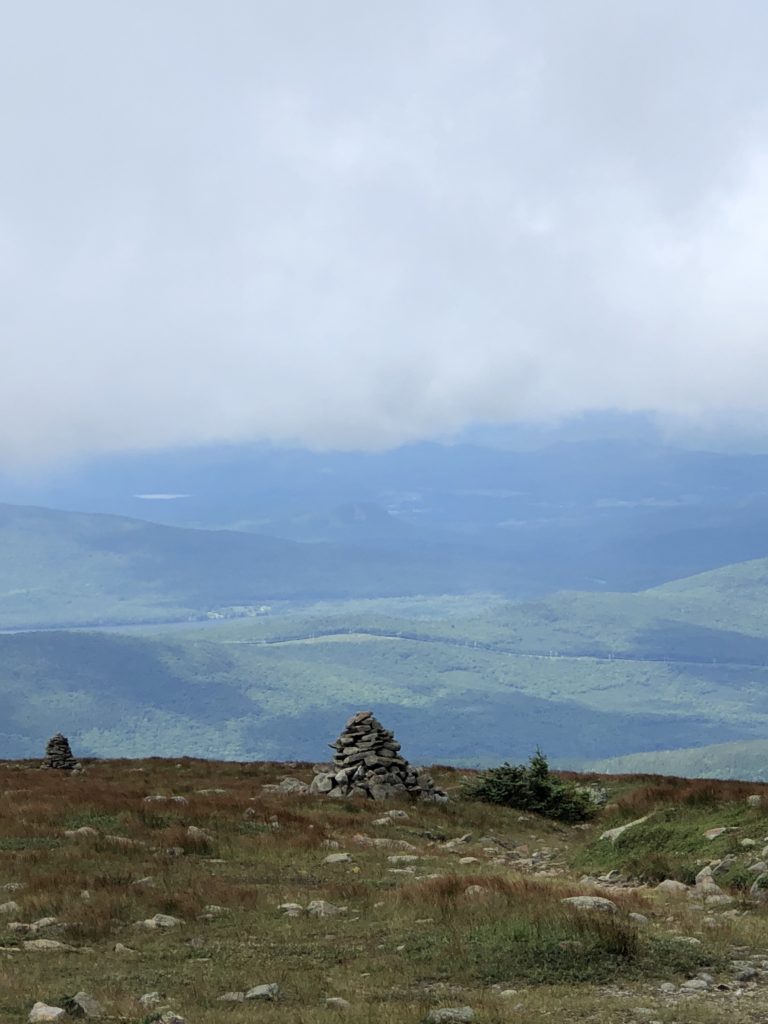
Take home: For the athlete and the meditation practitioner – what we do, even once, we DO own. That experience can never be taken from us. How we use that, and what we choose to do next, is up to us.Mt. Moosilauke, 4802′, NH. 2018

SILENT MEDITATION and YIN YOGA (post #2)

AM I MEDITATING?

“Am I meditating?” That’s the question I asked part way through a week long Silent Meditation Retreat. A group of us circled to share and ask, briefly breaking our silence. Meditation is whatever experience you have when you come to the practice to meditate. Sitting, walking, generative (guided), recollective (receptive, reflective), Yin, random moments during the day – all are types and times of meditation. Kindness, Attention, Tolerance and Patience – what we bring. Everything teaches.

DISCLAIMER: I do not pretend to offer guidance or wisdom within the sentences of this post, but I do hope to share with you, the reader, some snippets to ponder or practice, small gems that I brought home.

STATS:

https://joshsummers.net (Josh Summers)

https://freeportyogaco.com (Terry Cochburn)

https://www.spiritfireretreatcenter.com (Steve, Tim and, of course, DK)

August 27 through September 2, 2018. Daily schedule: 6 a.m. to lights out at 10 p.m. UNPLUGGED for the week! Sitting/journal, breakfast, work period, instruction/sitting/journal, walking meditation, sitting/journal/walking meditation, 12-1 lunch. Work period and time for a walk. Sitting/journal or small group discussion, sitting/journal/walking meditation; 4-5:45 p.m. Yin Yoga with Terry. Dinner and time for a walk, Dharma talk, sitting/journal, done. 24 hours: tea, meditation, wandering indoors and out.

SILENCE: This was the easy part. Go figure. When it was finally appropriate to speak again, the words came slowly and quietly until they built momentum culminating in a rather enthusiastic closing breakfast!

STILLNESS: Finding a comfortable seat is the start. Settling into stillness may be both the beginning and the ending of a practice. If that’s all we do, we have meditated. For me, the physicality of stillness, recognizing that it is not really passive but active in its own right, makes it an achievable component of my personal practice. As the week wore on I was better able to identify that very second when I slipped into stillness. Perhaps it was only a second, but it was real and I knew it. From my journal: “There is a definite moment when I slide into the sweet spot of the right dynamics, right alignment, to rest in stillness. It is purely physical and I recognize it when it happens. All of these physical experiences and qualities surely have a perfect counterpart mentally, emotionally and spiritually!”

MEDITATION: Throughout the week we meditated for blocks of 30 minutes the techniques of our choice. Generative meditation is guided, controlled, and can be helpful at the beginning of a sitting; receptive allows thought to wander, develop, return or resolve, tolerant, yielding; conflicted happens in any process. “A meditation retreat is like a massage for your psychic knots!”

While a sitting leads to mental processes, walking shifts focus to movement and embodied experience. I found attention to the mechanics of walking meditation, placing one foot in front of the other, led to balance and centeredness, easily seguing to the mental and emotional. Walking and sitting reinforce each other.

Josh guided us to use our schedule, silence and intention as the framework of our retreat. Through meditation we might develop awareness of our inner world and use it to benefit daily life. Repeatedly we need to remind ourselves to bring qualities of interest and awareness to everything we’re doing.

Meditation is part of a larger tradition. As we learned more about a few basic precepts of The Buddha, we also learned that Dharma is a collection of teachings that remind us of our own unique awareness and are easily inclusive of multiple spiritual paths (Buddhism, Christianity, Judaism, etc.)

Coming to sit/walk in meditation forces all of us to confront the habit patterns of our minds. Stillness reveals what is below our consciousness. Movement masks pain. And then there are the big four: Kindness. Attention. Tolerance. Patience.

During one of my morning sittings, I began in prayer. I recognized gratitude, as I am so richly blessed. One by one I visited each family member, friend, client, naming each and blessing each. (Loving kindness may sound a bit hokey, but the concept is pervasive! How our world would change if a practice of loving kindness could insinuate itself into community, business, education and politics!)

Sometimes I like to contemplate a single word and see where that leads. For example, patience. I am impatient. I want to do do do. I want to hurry up and achieve. And what does this say? It says I am afraid that I do not have enough – not enough time, resources, fitness, years to do all that I yet want to do. In relationship, if I am impatient, I do not have enough tolerance. So, perhaps patience presumes abundance. Nice, eh?

I might begin a sitting watching my breath, listening to sounds, squirming until still, thinking about a word … and then the meditative flow carries me off on its current, meandering here and there and perhaps finally pooling. The journey is mine to receive, investigate and relate.

JOURNALING: Used as a tool, journaling allows us to find our own language. Start with what we remember and then reflect upon it, connecting with our experience. The act of writing imprints, develops and expands. What is literal or factual transitions into creativity and ultimately that which is functional.

Towards the end I wrote: “The fabric of my life is richly textured and more profoundly beautiful for it. The tears have been stitched, the holes mended, the rough edges smoothed. Though the bones have at times been broken, they have healed stronger than before.”
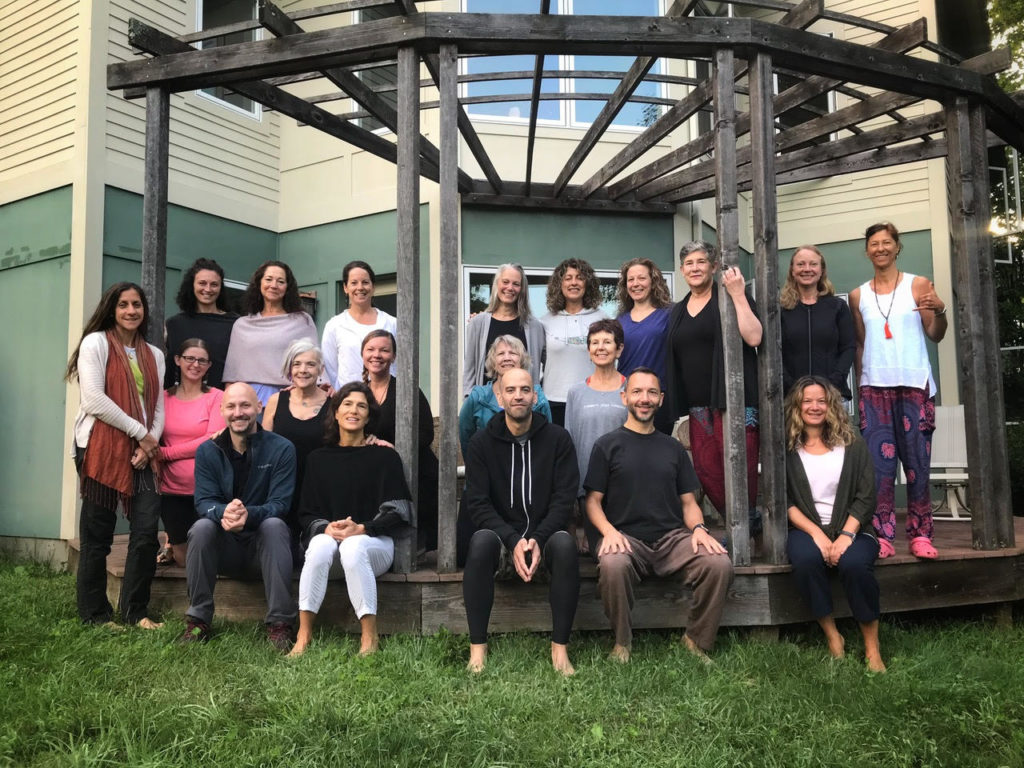
TEACH: A teacher is a spiritual friend. The ‘teacher’ is everything that is happening. If you let it, everything will teach. At this Retreat I was in the company of teachers. In fact, we are all teachers in some respect, each of us giving generously of ourselves as parents, coaches, leaders, managers, advisors, trainers or whatever. And we each, at some point, desperately need to refill our depleted reserves. Thus we seek to be taught.

Thank you, my Yoga Teacher and friend, Terry Cockburn.

Thank you, my Meditation and Yin Teacher and friend, Josh Summers.

Oh, what a privilege to teach and to be taught.

TAKE-HOME: “If we lose something, it was never ours in the first place.” It is not about holding on or letting go, but to cultivate openness to receive all experiences in their totality. Learn to be at peace with that. Daily practice? Different way to look at our relationships, our jobs, our words and reactions, our self-talk? Loving kindness? Perhaps I cannot claim intensity and drama within the context of each sitting; perhaps I cannot claim to have “gone deep” or to have become “enlightened.” Hey, I only did this for one week and those experiences are not so cheaply purchased!

But I will say this, my life IS changed. How so? I do not even wish to define that now. I will wait. I will continue to seek that sweet spot of stillness, if only for a few seconds. I will practice. I will study. I will do all with the presumption of abundance. And gratitude.

(and with my fellow Retreat attendees, I will near the end of each Meditation session with Ring the damn bell!)

SILENT MEDITATION and YIN YOGA (post #1)

Silent Meditation Retreat with Josh Summers and Terry Cockburn, Spirit Fire Retreat Center, 8/27-9/2/2018.

Late August in Vermont 2018

Oh how I resisted coming to this Retreat! For several months I prepared – read, practiced Yin, listened to Podcasts, emailed Terry, took care of clients and stressed-stressed-stressed about leaving Sophie. In fact, the very morning I dropped her off at the kennel, I would have cancelled if I could have.

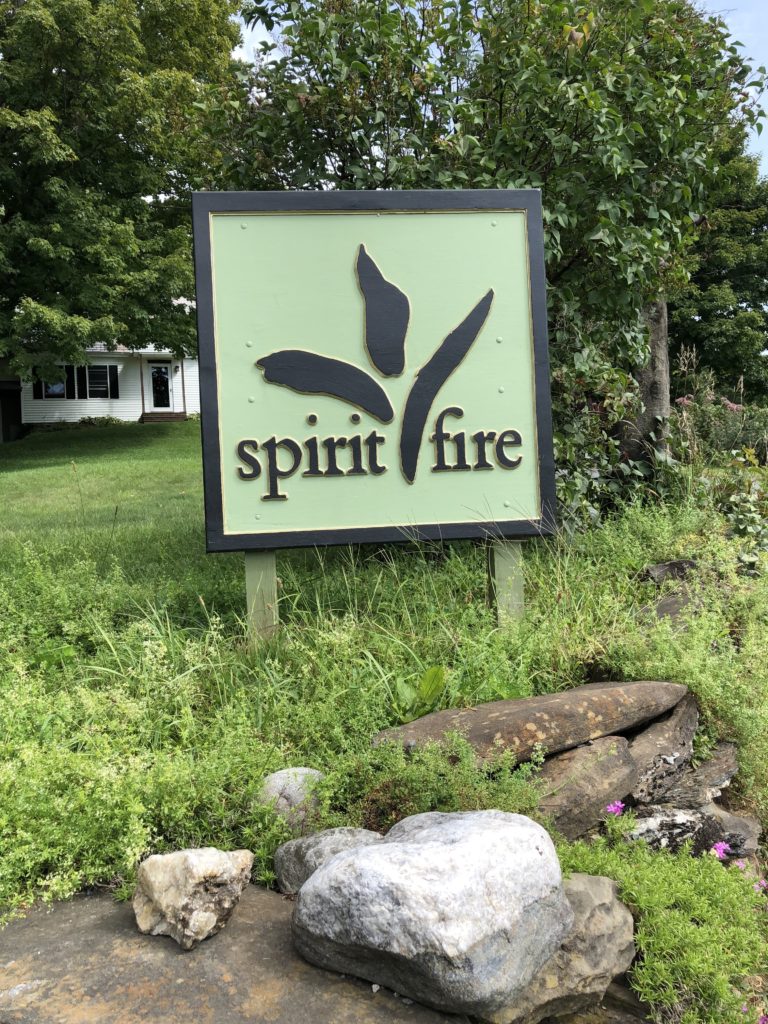
The drive to Leyden MA was beautiful, as was the weather. [And I will tell you right now, if you ever want to attend a retreat or take your retreat somewhere, run do not walk to Spirit Fire Retreat, https://www.spiritfireretreatcenter.com. You will fall in love with the Center as well as your new BFFs, Steve and Tim, who quite possibly literally and spiritually make the difference.]

Terry (https://freeportyogaco.com) warned this would be the hardest endurance event I’ve done. It was. It was so damn hard. The early days gave new meaning to sufferfest! But endure we did.

One night near the end of the week I journaled: “I am learning and evolving. Though the days have crept by, I do hope the practice has been enough and will become a part of me. But practice may be the key concept here. As Josh (https://joshsummers.net) counseled, ‘practice what you teach.’ And silence? It is so much easier in reality! As a group of individuals who had, for the most part, not even known each other’s names, the connection we shared was woven in a web of silence, a life-line of silence, so much stronger – and immediately so – than the polite chatter of new relationship”.

Reviewing my journal I note that early entries were hectic, worried, stressed, grasping for intention and some kind of significant practice. I noted physical discomfort, even pain. I blamed the restlessness on too much of the excellent coffee, but when I tried cutting back, it made no difference. Skip to the last full day: “I have found all 3 sittings this morning to be ‘energized,’ meaning no fatigue or struggle, balanced, grounded – far from the early days as restless or ‘itchy’. Equanimity: a warm embrace of what is going on.”

Perhaps each of us everywhere sincerely wishes to make the world a better place for our having lived in it. Even if our individual efforts appear futile, collectively? … who knows? I love that Josh gifted us with these words: “Our practice is a form of social action.” And so it is.

BEARS ON THE TRAILS

I love to hike and explore in Vermont and New Hampshire with my Chocolate Lab, Sophie. Our day hikes take us from meandering, wooded brook-side trails to rock face and astonishing summit views. Sophie, not quite 2, loves these adventures and is responsible for my new passion – hiking.
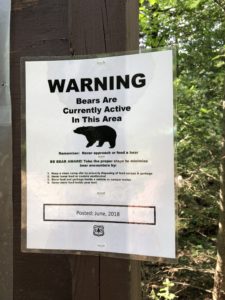
True confession: I am afraid of bears. Yes, I know, I know. Most likely most bears are far more afraid of me – or at least far more reluctant to encounter me than I am to encounter them. But that doesn’t change the way I feel. Hey, there are rogue people, aren’t they? I’m sure there are rogue bears out there in the woods. And more significantly, there are bears in the woods who might be surprised to see me show up or, far worse, a mama bear who might jump to the defense of her baby bear(s).

Perhaps what is significant here is that I know there ARE bears in the woods and on the trails. How do I know this? No, I have not met one – yet. I have seen a bear on my husband’s game camera set up on a trail I use frequently. I have stepped over bear scat and I have read blog posts, seen tv news reports, stopped to read signs posted at State Park entrances, and heard anecdotal accounts of bear sightings, often corroborated by cell phone pics.
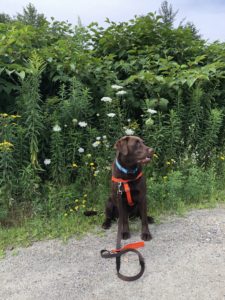
Moreover, it seems that the bear population is on the rise here in Vermont. We know this for a number of reasons and because wildlife officials are seeing a rise in the number of calls about incidents with black bears.

Most often bear activity is related to campsites and food. Guidelines and warnings about camping, food handling and storage, discarding garbage and Leave No Trace are easy to follow and involve a healthy dose of common sense.

For those of us who hike with dogs, there is an extra layer of prevention and protection for which we, the human companions, need take responsibility. I would hope that my dog would sense the presence of a bear long before I would and would alert me. I would fervently hope that my dog would not notice cubs and, thinking they are other pups to be greeted and played with, go do so. (Labs are oh so friendly with other dogs, aren’t they?). Disaster would ensue.
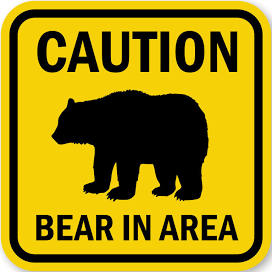
So, here’s what I do. I carry a leash in my hand if Sophie is off leash and, if I see her go on the alert or look skittish about anything, I call her back and snap on the leash until I know the coast is clear. Of course, things could get out of hand quickly but this is a start.

If I am anywhere near a campground or picnic area, I keep her leashed – especially if I am near the dumpsters. (Leashing your dog is often posted in this type of area anyway.) Following the advice of a friend, I have ordered a bear bell for Sophie to wear and may put another on my pack as well. On the other hand, I keep up a running conversation with my girl anyway, so I’m sure we give warning!

Here, as is often the case, awareness is the best policy. Though it may be tempting to zone out on a remote trail, perhaps it’s best not to.

Shared below are some words of advice from Vermont’s Green Mountain Club as well as a helpful link to yet more tips. Hike on!

WILDLIFE – Green Mountian Club August 2, 2018 Black BearsBears have become more active around Long Trail campsites and trails in the last few years. In areas with posted bear warnings, please follow a few basic steps:
  • Keep dogs leashed.
  • Do not feed or approach bears.
  • If you encounter a bear, make noise* and back away slowly. Do not run.

 Another GMC post says this: Bears are becoming more numerous and more active. Though usually shy and unaggressive, bears that have sampled human food can become dangerous, putting their lives at risk. Help bears stay safe: If you encounter a bear, stay calm, keep eye contact, talk to the bear in a conversational voice*, and back away slowly. Do not run. Do not feed or approach bears. Report bear encounters to the GMC.

(Note: there does seem to be a discrepancy about making noise or a conversational voice, but it is agreed not to turn and run.) It is also important to consider other wildlife… MOOSE – Moose tracks and droppings can be seen throughout the trail. While moose look similar to deer, they can be extremely dangerous when irritated. If you see a moose on the trail, do not approach it. Wait for the moose to move on before continuing. They are particularly territorial in the fall during mating season. Their eyesight is very bad so the recommended strategy if a moose charges you is to try to put a large tree between you and the moose, remove your pack and make human noises.

And the link: https://www.ripitenergy.com/beware-bear-10-safety-tips/

TO HIKE-Random Reflections on Dayhiking in the Northeast


To hike: “to walk a long distance especially for pleasure or exercise: to suddenly increase the cost, amount, or level of (something)” merriam-webster

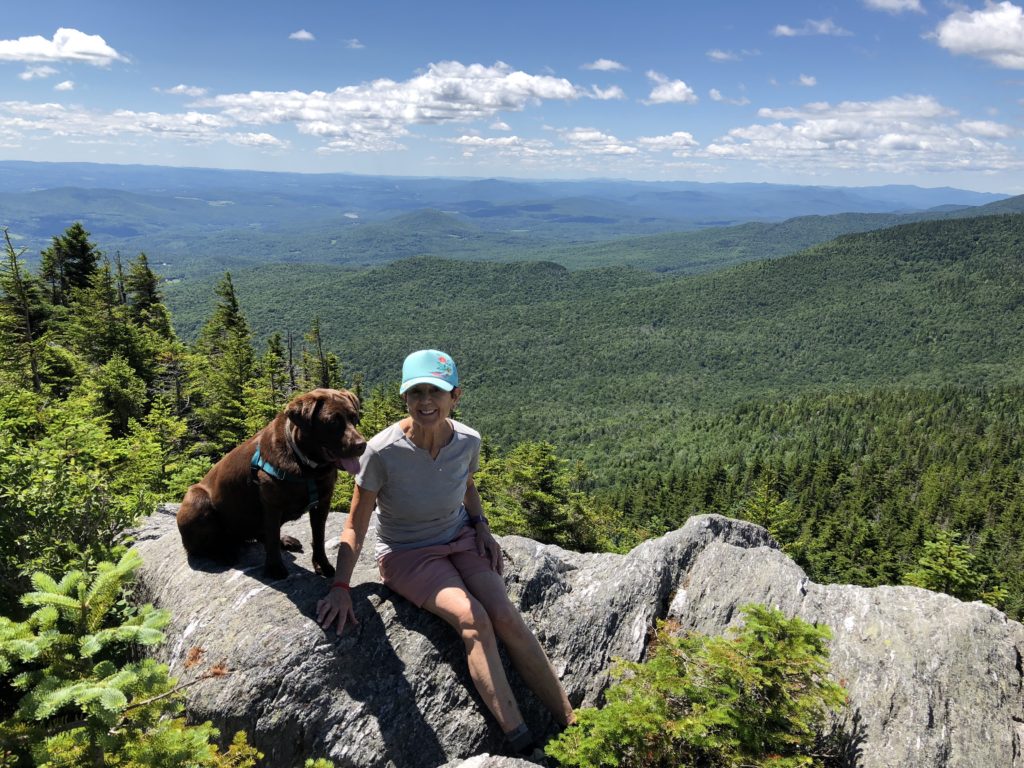
with Sophie on Mt. Worcester, Vermont 2018

UP-Perhaps it is because I live in Vermont, to me to hike means to go UP, i.e. “suddenly increase the … level.” I somehow associate the long slogs through wooded areas with trekking, or hitting the trail. I like to do both but I especially enjoy the challenge of climbing the rocky segments of a steep trail – as long as there are some good hand holds and I don’t look down! Interestingly, though I do gaze in awe at the view from the summit, that’s not what attracts me to the hike – it is time with my BFF, Sophie, my Chocolate Lab, and the process, the journey. Hiking is such a metaphor for life. And, as I add the years, I accept the slower pace, the digging deeper for strength and endurance, the need for focus and the attention to balance. In fact, I realize my personal hiking challenge is not fitness, it is footing. Again, such a metaphor for life!

SEQUENCE: Prepare-Up-Pause-Down-Recover-Repack

A hike begins weeks and months before it actually happens. (Rather, a successful and comfortable hike does.) All the elements of training for athletic endeavors apply to hiking as well. Deliberately enhancing fitness in all its aspects including nutrition over duration – not just packing an energy bar for the top – programs a better experience on first and subsequent hikes. (Here I write of day hikes since through hiking is an entirely different animal.)

Preparation also includes researching the trail, planning for emergencies and changeable weather conditions, putting into practice safety concepts (letting people know where you are going, when you anticipate returning), packing your pack. Note: cell phones are great but here in Vermont there is limited service. Find alternative apps, etc. And, please observe cell courtesies in the presence of others.

Up often includes a preliminary portion of the trail that is either through the woods or along a path leading to the climb. It is a good chance to warm up (and, if hiking with your dog, spend a few minutes with some “pay attention to me” on-leash reminders). It is a time to gather thoughts and energies for what lies ahead. I don’t know about you, but I find that if my mind wanders, I might also wander – maybe even off trail. I may slow down or become careless with my steps. Then there is the chatter. I talk to Sophie – a lot. When hiking with friends I am tempted to chatter away. Stop! I need to remind myself! Value the silence sometimes. FOCUS.

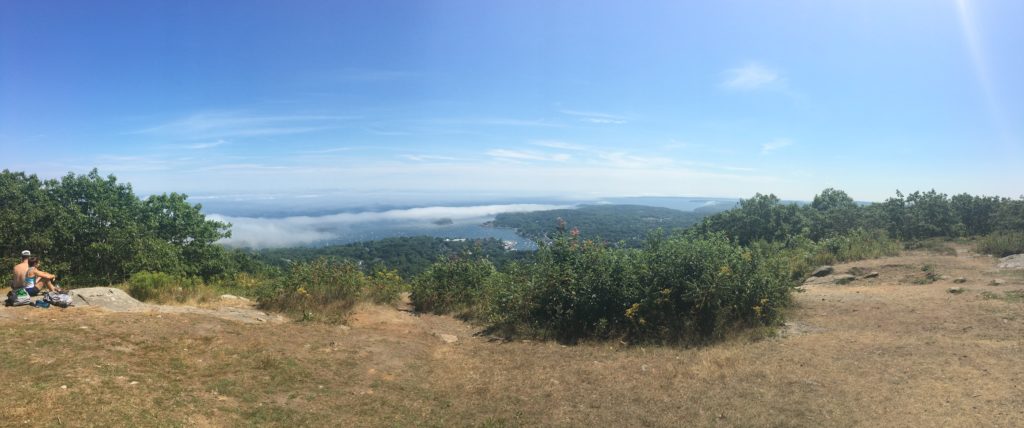
Pausing at the top is a must! For many, this is the entire purpose of hiking. For others it is a perfect lunch break, rest or photo op. Note: if hiking with dogs or children, beware of fragile vegetation at the summit or potentially hazardous drop offs. Safety and consideration always rule.
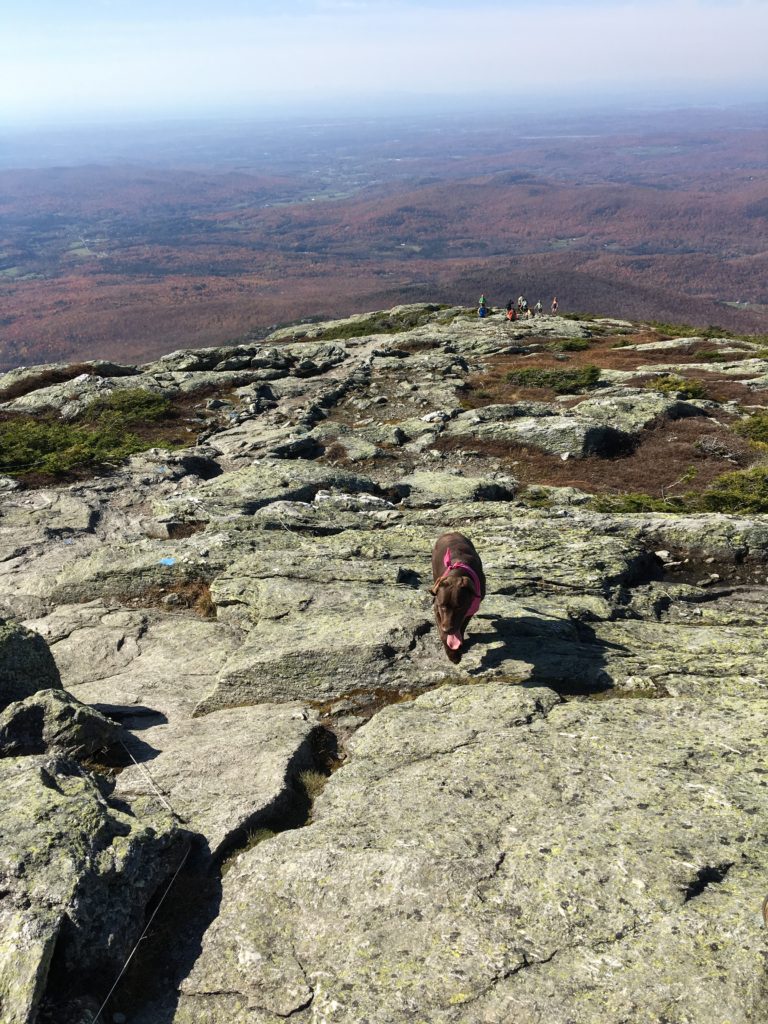
Down is my least favorite direction to travel. Roots, loose dirt or rocks, muddy or slick surfaces and sometimes huge steps are as much of a challenge to me as navigating a stream crossing. (I admitedly defer to descending purposely on my butt!) This is definitely not the time to relax and assume that the work is done.

Recovery is too often neglected. There is the immediate recovery of post hike refueling and rest at the bottom. Perhaps a change of clothes, especially foot wear, and a few stretches before getting into the car would be smart. Depending on the challenge of the hike, active rest the following day might be the ticket. Not to be underestimated, sharing the story of a hike, posting on FB, journaling or simply reviewing the experience is instructive, pleasurable and restorative.

Repack. Aha! Here’s the trick! First unpack and dry out anything damp or wet. Then either repack for your next adventure, lay out your necessities, or make a punch list for the next time based on what you may have needed or learned on your most recent trip. Remember those moments on the trail when you said “I wish I had …?” Now is your chance.

Sunset Ridge, Mt. Mansfield,Vermont

COURTESY-Yes, there are trail courtesies and, as with most good manners, they are all about consideration. Leave No Trace (essentially pack in/pack out, https://www.greenmountainclub.org/hiking/leave-no-trace/), greet other hikers pleasantly and step aside as the situation dictates (some feel the uphill hiker might chose to allow the downhill hiker to proceed while others feel one should always concede to the uphill hiker-so perhaps let the situation dictate is the better rule), offer assistance when called for and, of course, observe stewardship of the trail and surroundings.

GEAR-Oh, so much to say about gear! Choosing the right gear is very individual and usually based on experience and conditions. Hiking the more popular mountains in Vermont I am always astonished when I see folks leave the parking lot to head up wearing sandals or fashion tennis shoes and carrying – nothing. There is no need to reinvent the wheel on a packing list so please, if unsure, look for advice from those who have been there/done that. (The Green Mountain Club or the Appalachian Mountain Club are always good resources. For example: https://www.greenmountainclub.org/the-long-trail/trip-planning/) Note: some readers live in other areas of the country so, of course, utilize a local hiking resource. But if and when you visit Vermont ….

The basics are obvious: appropriate attire including several layers, one of which is waterproof, good shoes or boots (often personal preference here – I like trail runners for the most part because I opt for traction and flexibility but my ankles sometimes call out for higher boots, etc), poles, and a pack. Note: when I hike the Whites or with my friends, I am the only one without poles. In the past I have cited my need to have hands free for Sophie. Now, with my new vest that easily snaps in folded poles, I have a pair on order. When I hike on easier day hikes in Vermont, I see many without poles. Good to have options! Oh, and BTW, Ultimate Direction now makes poles with 2 levels of handgrips that so easily address the dilemma of uphill and downhill https://ultimatedirection.com/fk-trekking-poles/.)
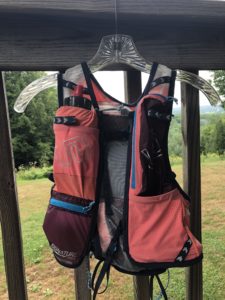
Speaking of Ultimate Direction, it is a company I have just discovered in my search for the perfect pack. I lug a lot of water on my hikes because of Sophie and those water bottles are both awkward and heavy. I bought a nice one from Orvis that includes a top for her to drink out of, but again it is awkward. (Hate it when I bend forward and the water bottles drop out and hit me on the head!) And, yes, I know, Sophie should carry her own – but I hate to interfere with her freedom to explore when it is ok for her to do so and I certainly don’t want to affect her balance when scrambling up or down steep rocks. Better me.

Now about that pack …

LOVE this vest from Ultimate Direction!  

https://ultimatedirection.com/adventure-vesta-4-0/ While I understand that there are many excellent products for far less money, after having tried and returned several varieties, this is the one that works for me. (besides, I ordered from Amazon and had lots of extra Amazon dollars to put towards) I’ll let you click on the website for the details, but here’s what I carry comfortably and securely (summer hiking season): for Sophie, I fill the bladder, remove the hose and carry a soft folding bowl, treats and several edible nutritional bones for her lunch break; water for myself in the front bottle, electrolyte powder to add, energy bar and/or food, cell phone (hoorah – this is the only pack/vest I have found that accommodates iPhone8+ in front!), rain jacket, wind jacket, extra layer if needed, gloves if needed, head lamp (needed or not), wallet, whistle, map, ibuprofen, bandaids, dry socks, sunglasses, sunscreen, insect repellent, and the kitchen sink. Just kidding. I can snug down the pockets and snug up the fit so this vest, parts of which are water repellent, is like a second skin and carried higher on the back which prevents lumbar fatigue and protects balance. Yeah, I know, this vest is designed for women ultra distance trail runners. But hey, if it works for them, surely it works for me.


I always wear a baseball cap and my RoadID bracelet with emergency contact info; states that I am hiking with my dog just in case…and Sophie’s collar sports her name and a phone #)
 

TRAILHEAD-The trailhead is the beginning and the end of an out-and-back or loop day hike.

useful resource for running or hiking

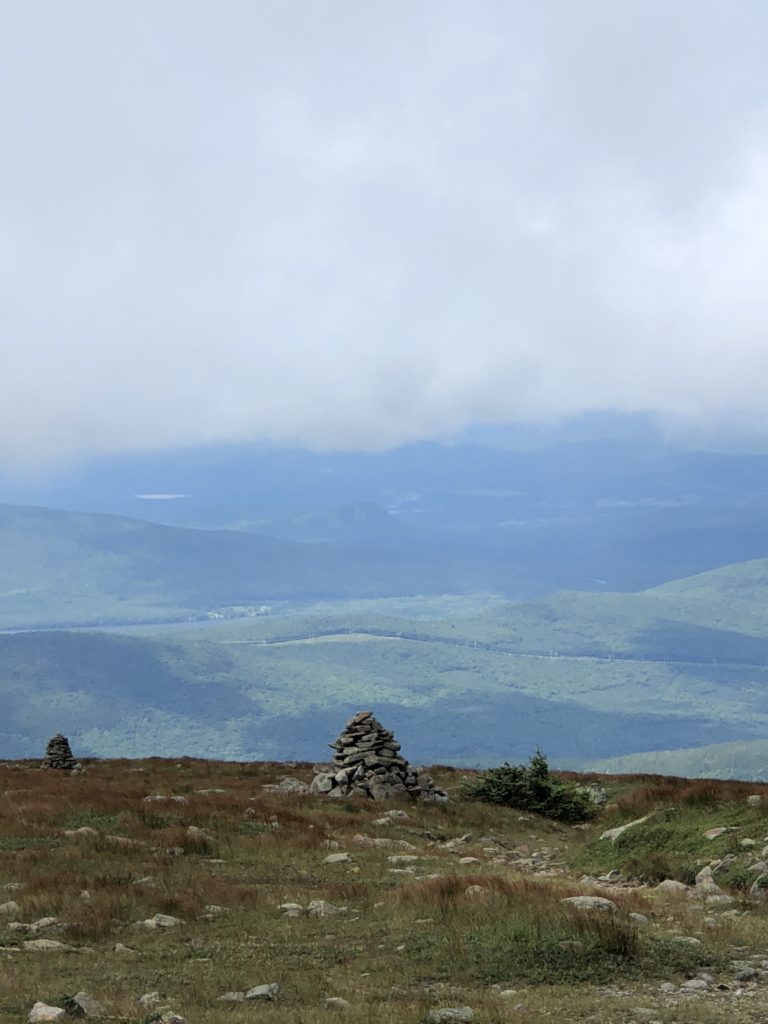
It marks both anticipation and accomplishment. Adventure begins here; memories are saved. A day alone or with friends, physical exertion, exhilarating views, woods, wildlife, time, and then well-earned fatigue are all to be had for a hike. Won’t you plan to visit a trailhead soon?

The Whites – New Hampshire – Mt. Moosilauke, 2018